
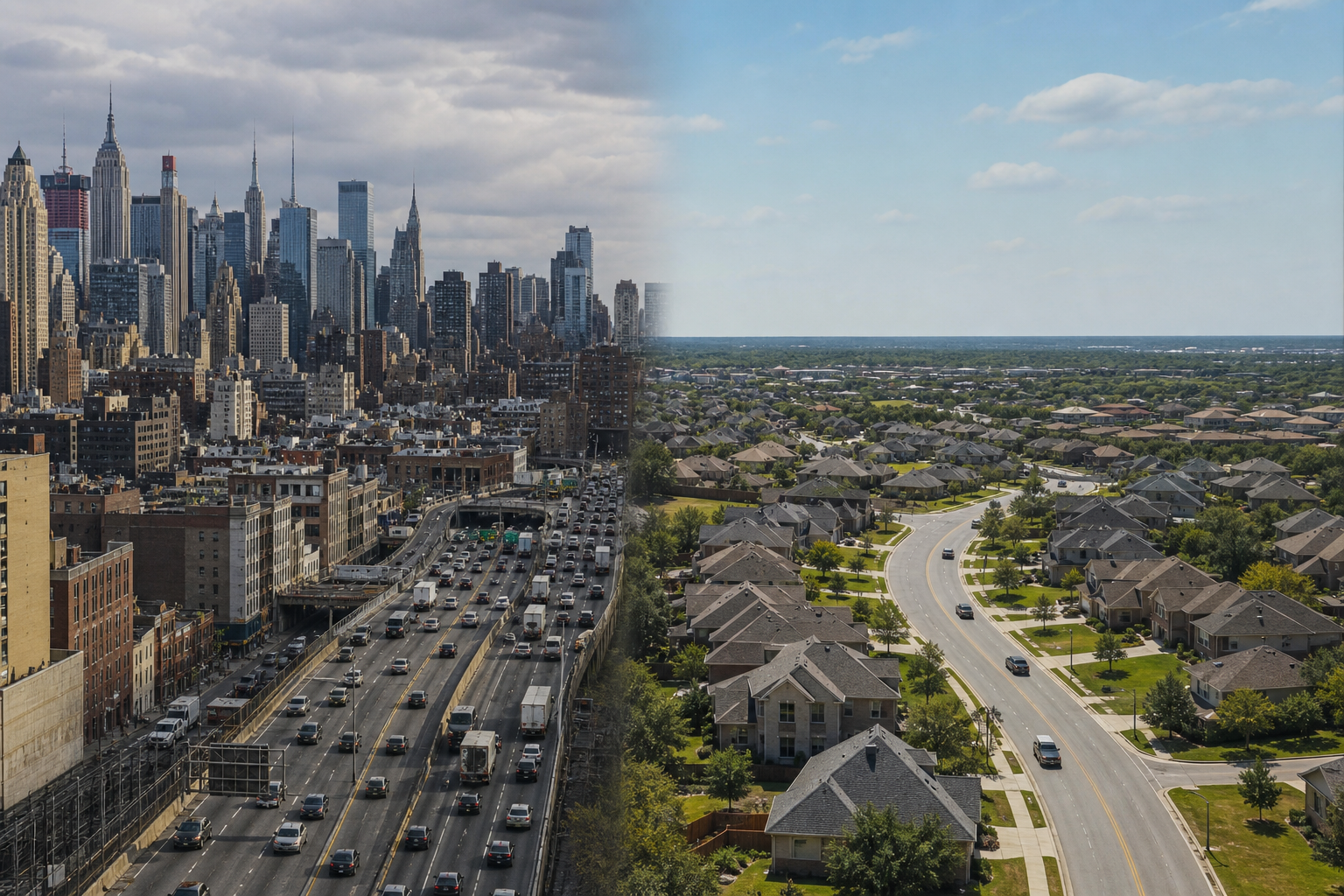
The latest IRS migration data adds statistical weight to something Americans have sensed for years: people are leaving high-tax, high-cost states and moving in large numbers to lower-tax destinations such as Florida and Texas. That does not mean taxes are the only factor in where families settle. Housing prices, job opportunities, climate, crime, regulation, and quality of life all matter. But it would be willfully blind to pretend tax policy is irrelevant when the destinations drawing newcomers tend to share one important trait: they ask less of residents' incomes.
The IRS data, based on address changes in tax filings, has long offered one of the clearest windows into domestic migration. It is not perfect. It trails real-time events, and it captures tax filers rather than every individual equally. Still, it remains a useful barometer of where working households and retirees believe they can build a more affordable life. In recent years, states like New York, California, Illinois, and New Jersey have routinely posted net outflows, while Florida and Texas have remained among the chief beneficiaries.
Why the Tax Question Matters
Progressives often respond to this trend by arguing that affluent states provide more services and stronger public benefits. Sometimes that is true. But there is a straightforward question any responsible government should ask: are residents receiving value proportional to the burden imposed on them?
For many voters, the answer increasingly appears to be no. A state can levy high income taxes, high property taxes, and extensive business regulations only so long as citizens believe public order is sound, schools are functioning, infrastructure is maintained, and opportunity remains within reach. Once that confidence erodes, the tax bill stops looking like the price of civilization and starts looking like a penalty for staying put.
Florida and Texas are not tax-free utopias. Texans, in particular, know that property taxes can be steep, and Florida has its own affordability pressures, especially in insurance and housing. But both states have benefited from a simple political fact: they do not impose a state income tax. That matters, especially for entrepreneurs, professionals, retirees, and mobile households able to choose where they live.
A Warning for Blue-State Governance
The larger lesson here is not merely that Americans prefer warm weather. It is that governance has consequences. If a state combines high taxes with expensive housing, slow permitting, public disorder, and stagnant population growth, residents eventually begin to draw obvious conclusions. They may tolerate one or two of those burdens. They are less willing to tolerate all of them at once.
That is why the migration story should be read not as a partisan talking point but as a referendum on governing competence. States do not lose residents simply because cable-news hosts tell them to. They lose residents when ordinary people conclude that the gap between what government promises and what government delivers has become too wide.
California is a revealing example. It remains a state of enormous economic dynamism, extraordinary natural advantages, and world-class industries. Yet many middle-class families have found the cost of remaining there difficult to justify. High housing costs, extensive regulation, and a substantial tax burden have made exit look rational. New York and Illinois face similar pressures for different reasons, especially when public finances appear strained and taxpayers suspect the next bill is always around the corner.
What Florida and Texas Offer
It would be too neat to say Florida and Texas are succeeding because they tax less and leave it at that. They also offer something broader: a governing model that, whatever its flaws, signals openness to growth. Builders can build more readily. Employers often face fewer barriers. Households believe they have room to advance.
That sense of possibility matters. Population flows are not just about tax avoidance; they are also about optimism. People tend to move toward places where they think their paycheck will stretch further, where regulation is less suffocating, and where public policy is oriented toward expansion rather than managed decline.
Conservatives should be careful here not to romanticize every Sun Belt success or dismiss every challenge these states face. Rapid growth strains roads, schools, water systems, and housing stock. If state and local leaders are not prudent, today's success can become tomorrow's affordability crisis. Sound governance requires discipline in fast-growing states no less than in shrinking ones.
The Fiscal Problem for States Losing Population
There is also a hard budgetary reality. When higher-income households leave, they often take a disproportionate share of tax revenue with them. That can create a vicious cycle. To make up for losses, lawmakers may raise taxes further or rely on temporary budget gimmicks, which can prompt more departures. Meanwhile, fixed obligations such as pensions, debt service, and Medicaid do not simply disappear because the tax base has thinned.
This is where institutional conservatism has something useful to say. A healthy state is not one that chases every new spending commitment in good times and hopes growth will cover the difference later. It is one that treats taxpayers as citizens to be served, not revenue sources to be mined. Fiscal restraint is not merely ideological preference; it is a recognition that political systems become unstable when productive residents believe they are financing dysfunction.
Mobility as Democratic Feedback
Americans vote in elections, but they also vote with their feet. Interstate migration is one of the most powerful forms of democratic feedback in a federal system. Our constitutional order allows states to pursue different policy models. That diversity can be healthy. It lets citizens compare outcomes rather than simply debate theories.
When large numbers of people leave one set of states for another, elected officials ought to pay attention. The point is not that every low-tax state is virtuous or every high-tax state is failing. Rather, the pattern suggests that many Americans still prize affordability, opportunity, and limits on government appetite. They are not moving solely for ideological reasons. They are moving because policy has made everyday life more manageable somewhere else.
The Right Lesson for Policymakers
The right response from leaders in out-migration states would be serious self-examination, not denial. Are taxes competitive? Is housing being artificially constrained by regulation? Are public services reliable? Are businesses and families treated as long-term partners or as convenient targets? These are not abstract questions. They shape where people invest, raise children, and retire.
For Republicans, the lesson is equally clear: lower taxes alone are not enough. If conservative-led states want to remain magnets for growth, they must pair tax restraint with competent administration, strong infrastructure, public safety, and a cost structure that middle-class families can sustain. Success can be squandered by complacency.
Still, the broad message of the IRS data is difficult to miss. In a country where mobility remains possible, citizens will continue to seek governments that respect their earnings and make room for ambition. That is not greed. It is common sense. And it is a reminder that in a federal republic, bad policy does not merely provoke complaints. Eventually, it produces moving vans.
