
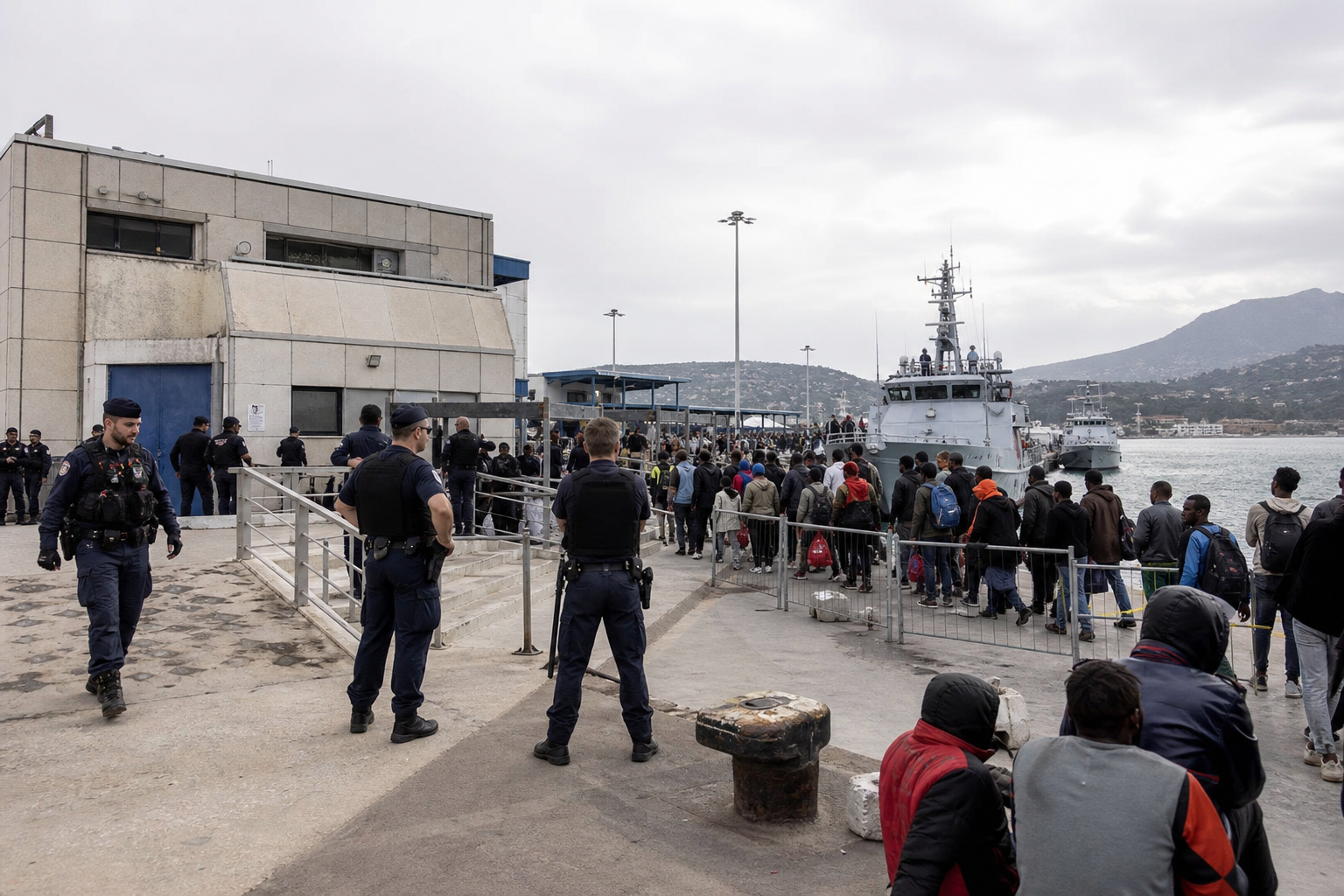
Europe’s long-running immigration debate offers the United States a useful, if uncomfortable, lesson: policy signals matter. When governments speak as though enforcement is optional, when asylum systems are stretched beyond recognition, and when political leaders confuse humanitarian concern with the abandonment of borders, migrant flows tend to rise.
That is not because every migrant is gaming the system, nor because every liberalized policy is made in bad faith. It is because people respond rationally to incentives. If entry appears likely, removal unlikely, and legal standards inconsistently applied, more people will attempt the journey. That is as true in the Mediterranean as it is at the Rio Grande.
Europe’s Experience Is a Case Study in Pull Factors
Over the past decade, Europe has faced repeated migration surges driven by war, poverty, political instability, and weak border management. The 2015 migrant crisis remains the clearest example. Conflicts in Syria and elsewhere created a genuine humanitarian emergency, but Europe’s internal political response also shaped the scale of onward movement. Public declarations of openness, uneven asylum enforcement, and the practical difficulty of returning those who lacked valid claims created the perception that once a migrant reached European soil, the odds favored remaining.
That perception matters. Smuggling networks study it. Migrants study it. Families deciding whether to risk dangerous journeys study it. Governments may prefer to describe migration as a force beyond their control, but policy choices can either reinforce orderly legal channels or encourage irregular entry.
Even now, European governments continue to wrestle with the consequences. Countries across the continent have tightened border checks, reconsidered asylum procedures, and increased attention to removals. This is not because Europe has suddenly become indifferent to human suffering. It is because governing authorities have rediscovered a basic truth of statecraft: compassion without control is not a durable immigration policy.
The Asylum System Cannot Carry Every Burden
One of the clearest lessons from Europe is that asylum law works poorly when it is used as a substitute for broader immigration policy. Asylum exists to protect people fleeing persecution on specific legal grounds. It was never designed to absorb every form of economic hardship, generalized insecurity, or state failure across multiple continents.
When leaders blur those categories, two predictable things happen. First, asylum systems become backlogged, overwhelmed, and less credible. Second, the very people with the strongest claims can wait longer for relief because the system is clogged with cases it was not built to handle.
The United States has seen its own version of this problem. American law recognizes asylum, but the process becomes politically unstable when it is overwhelmed by large numbers of claims that take years to adjudicate. Europe’s experience should remind U.S. policymakers that a legal right to seek asylum is not the same thing as an obligation to tolerate indefinite disorder at the border.
A functioning system requires timely adjudication, clear standards, and actual consequences for unlawful entry when claims fail. Without those elements, law becomes theater.
Progressive Politics Often Underestimate Enforcement
Much of the Western left approaches immigration from an understandable moral premise: nations should treat migrants humanely. Fair enough. Any civilized country should. But too often progressive immigration politics move from humane treatment to institutional laxity, as though border enforcement were itself suspect.
That is a mistake, and Europe has paid for it repeatedly. Governments that hesitate to detain, remove, or even clearly discourage unlawful entry often discover that rhetoric alone cannot manage migration. Public expectations outrun state capacity. Local services strain. Housing systems tighten. Schools and municipal budgets absorb costs that national elites too often discuss in abstractions.
This has consequences beyond immigration itself. When mainstream parties refuse to address obvious enforcement failures, voters do not simply stop noticing them. They look elsewhere. Across Europe, frustration over migration has fueled support for populist and nationalist parties that promise far more than they can responsibly deliver. In that sense, weak enforcement does not strengthen liberal democracy. It discredits it.
American conservatives should take that point seriously. Border security is not merely a policy preference; it is part of democratic legitimacy. A republic that cannot control entry to its territory will struggle to sustain public confidence in the fairness of its laws.
What the United States Should Learn
The American border challenge differs from Europe’s in geography and legal structure, but the policy principles are similar. The United States does not need to imitate every European measure to learn from Europe’s difficulties.
Several lessons stand out:
- Enforcement must be visible and consistent. Mixed messages invite surges. If migrants believe that crossing the border will likely result in release into the interior pending lengthy proceedings, more will come.
- Asylum claims should be decided more quickly. A years-long backlog benefits no one. Legitimate claimants deserve prompt protection; invalid claims should lead to removal without endless delay.
- Interior enforcement matters. Border policy alone is not enough if unlawful entrants can remain for long periods with little chance of repatriation.
- Legal immigration and border enforcement are complements, not opposites. A country can welcome lawful immigrants while insisting that the rules mean something.
- Political leaders should speak plainly. Human dignity and sovereign borders are not mutually exclusive. Pretending otherwise only deepens public cynicism.
A Serious Nation Needs Both Mercy and Order
There is a sentimental temptation in modern politics to treat enforcement as moral failure and procedural leniency as compassion. But states exist in part to make moral obligations workable in the real world. They do this through laws, institutions, and limits. Remove those limits, and the result is not higher virtue. It is administrative breakdown.
Europe’s experience shows what happens when leaders fail to distinguish between sympathy and policy. The public grows frustrated, the asylum system loses legitimacy, and political extremes gain ground by exploiting problems that responsible governments were too timid to confront directly.
The better course is neither cruelty nor utopianism. It is ordered liberty applied to immigration policy: generous where the law requires generosity, firm where sovereignty requires firmness, and honest about the trade-offs involved. A nation has the right to decide who enters, under what terms, and in what numbers. That is not xenophobia. It is self-government.
For American policymakers, the warning from Europe is straightforward. If you weaken deterrence, irregular migration will increase. If you blur legal categories, systems will buckle. And if mainstream leaders refuse to enforce borders in a competent and humane way, voters will eventually demand that someone else do it—perhaps less prudently.
Border security is not the opposite of compassion. Properly understood, it is what allows a free and decent country to practice compassion without surrendering control of its laws. Europe learned that lesson the hard way. The United States should not wait to do the same.
