
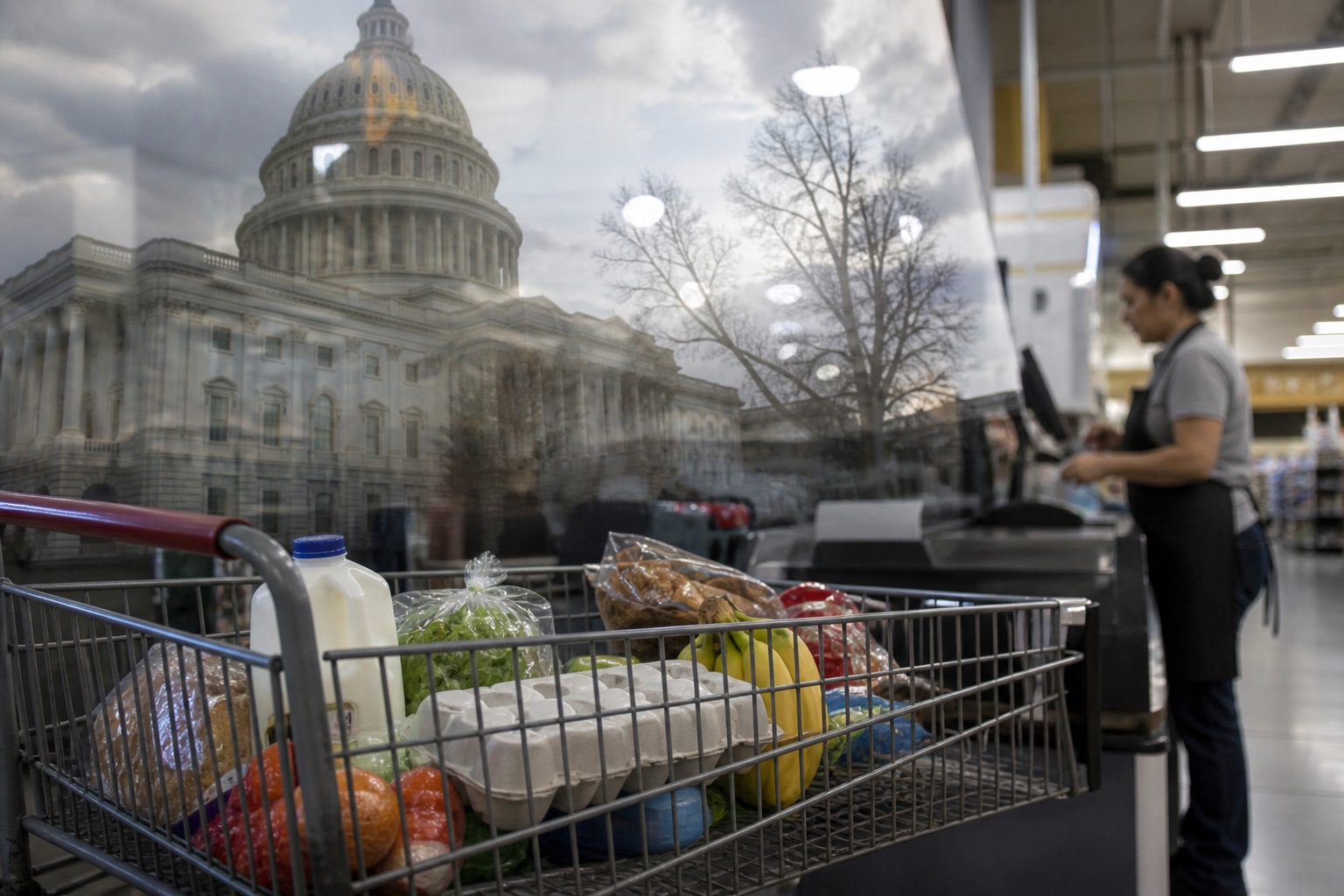
For many American families, inflation is no longer an abstract economic term discussed by central bankers and television commentators. It is the difference between leaving the grocery store with a full cart and putting items back at the register. It is the weekly recognition that staples once taken for granted — eggs, meat, bread, milk, produce — now consume a larger share of the family budget than they did just a few years ago.
Food prices rise for many reasons, some temporary and some structural. Weather can damage crops. Disease can affect livestock. Global energy markets can drive up transportation and fertilizer costs. Supply chains can seize up. But it would be a mistake to treat today’s affordability problem as though it were caused by nature alone. Government policy has played a central role in making everyday food more expensive, both by fueling broad inflation and by layering mandates, subsidies, and regulations onto nearly every step of the food economy.
Inflation Begins in Washington Before It Shows Up at the Checkout Line
The first point is simple enough: when Washington spends vast sums it does not have, and when the broader policy environment encourages too much money chasing too few goods, prices rise. That is not a partisan slogan. It is basic economics. The inflationary episode of the past several years had multiple causes, including pandemic disruptions and shifts in global demand, but federal spending and intervention plainly added to the pressure.
Once inflation takes hold, food prices become especially painful because groceries are not optional. A family can delay buying a new appliance or postpone a vacation. It cannot stop buying bread, fruit, or ground beef. Low-income households, retirees on fixed incomes, and working families with children are therefore hit hardest when the dollar buys less each month.
This is one reason conservatives have long argued that sound money and fiscal restraint are not cold abstractions; they are forms of social responsibility. Inflation is a hidden tax, and like most hidden taxes, it falls most heavily on those with the least room to maneuver.
The Cost of Regulation Travels Through the Entire Food Chain
Yet broad inflation is only part of the story. Government intervention also raises food costs in more direct ways. Farmers, processors, truckers, grocers, and restaurateurs all operate within a web of federal and state rules. Some are necessary for health and safety. A modern food system requires inspection standards, disease controls, and basic honesty in labeling. But it is equally true that not every rule is costless, and not every mandate is wise.
When energy policy constrains supply or raises fuel costs, farmers pay more to run equipment, transport goods, and refrigerate products. When fertilizer and chemical inputs become more expensive, those costs do not vanish; they move down the line. When labor regulations become more burdensome in sectors already facing tight margins, businesses respond the only way they can: by raising prices, reducing service, or shrinking output.
The same is true in transportation. Food is a perishable business. Delays at ports, shortages in trucking capacity, or rules that make distribution more expensive can quickly show up in retail prices. By the time a gallon of milk or a package of chicken reaches the shelf, it has already absorbed the cost of compliance at numerous stages.
Subsidies and Market Distortions Have Consequences Too
Americans are often told that government action is needed to make food affordable. Sometimes targeted assistance for the truly needy is justified and humane. But policymakers should be honest about the difference between helping households purchase food and making food itself cheaper to produce. The two are not the same.
Subsidies can distort production incentives. Price supports can encourage inefficiency. Tariffs and trade restrictions can reduce competition and keep certain goods more expensive than they would otherwise be. Well-meaning intervention can, over time, create a system in which large firms with compliance departments thrive while smaller producers struggle to survive. That is not a free market. It is a managed market, and managed markets tend to reward political access as much as productive efficiency.
There is a broader institutional lesson here. Government often promises to shield citizens from market volatility, but in practice it frequently inserts itself in ways that reduce flexibility and increase costs. A healthier approach is not anarchy; it is discipline. Government should set clear rules, enforce them fairly, and otherwise resist the temptation to micromanage industries it can scarcely understand in real time.
What Families Experience Is a Loss of Margin
Policy debates in Washington are usually conducted in percentages, indexes, and legislative scores. Families experience them more concretely. They buy less fresh food and more low-cost fillers. They switch to store brands. They drive to multiple stores to compare prices. They cut back on household savings because groceries now absorb money that once went elsewhere.
That loss of margin matters. A nation becomes more brittle when ordinary households have no buffer. Rising food costs do not merely tighten budgets; they erode confidence. Parents begin to feel that even diligent work no longer secures the basics as reliably as it once did. That perception, if it hardens, weakens faith not only in economic stewardship but in public institutions more generally.
Conservatives should take this seriously, not merely as a talking point against the current governing class but as a matter of civic stability. Self-government depends in part on public trust that the basic machinery of the economy is being handled competently. When policymakers appear indifferent to the price of necessities, they invite understandable frustration.
What a Better Approach Would Look Like
No serious person should promise that one bill or one election will instantly return prices to where they were. Inflationary damage takes time to unwind. But there are practical steps that would help.
- Restore fiscal discipline: Congress should treat chronic deficit spending as an economic problem, not simply a political inconvenience.
- Encourage abundant energy: Lower and more stable energy costs reduce pressure across the entire food supply chain.
- Review regulations with cost in mind: Rules that do little for safety or competition but add substantial expense should be reconsidered.
- Support competition: Smaller producers and regional suppliers should not be pushed aside by compliance regimes designed around the largest firms.
- Use targeted relief carefully: Temporary, focused help for vulnerable households is preferable to broad stimulus that risks reigniting inflation.
These are not glamorous reforms, and they lack the drama of emergency interventions. But durable affordability rarely comes from grand gestures. It comes from competent governance, predictable rules, and restraint.
The Conservative Case for Affordability
There is a tendency in modern politics to hear any criticism of government intervention as a theological defense of markets in all circumstances. That misses the point. The conservative case is not that markets are perfect. It is that dispersed decision-making, price signals, competition, and limited government generally allocate goods more effectively than distant bureaucratic management does.
Food affordability is a good example. The more Washington treats the economy as a machine to be tuned from above, the more often it creates secondary effects that burden the very people it claims to help. A constitutional system built on limits and humility ought to encourage policymakers to remember what government can do well — and what it cannot.
American families do not need lectures about why prices are higher. They know. What they need is a governing class willing to admit that policy choices have consequences. When public spending is reckless, when regulation is careless, and when inflation is tolerated too long, the bill arrives eventually. More often than not, it arrives in the grocery aisle.
