
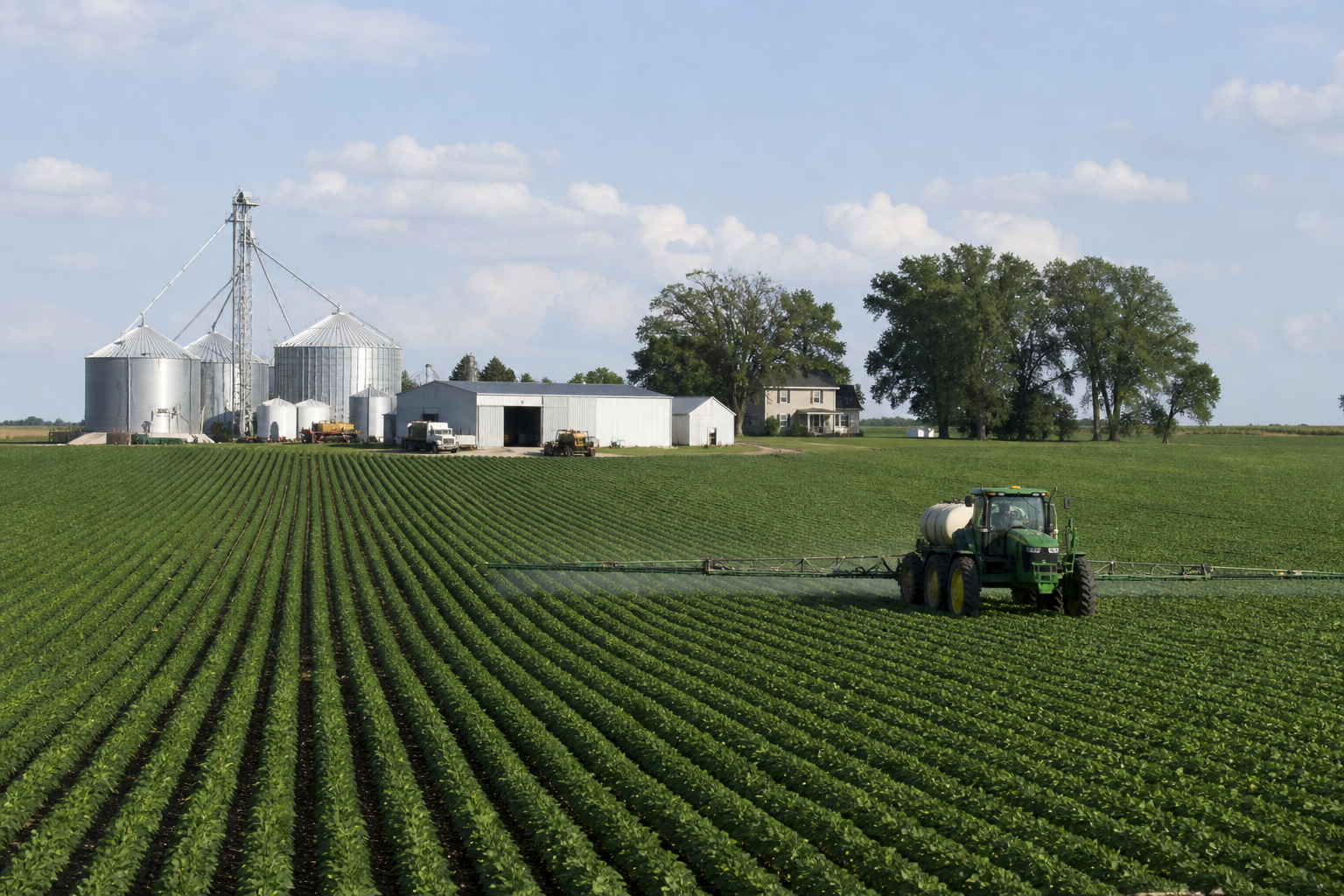
The Architecture of Food Security
As Americans gather around tables this season, few pause to consider the intricate web of policy decisions that made that meal possible. The turkey on the table, the corn filling the casserole dish, the grain fed to the cattle—all of it arrived there through a system shaped by decades of agricultural policy choices. Understanding those choices, and why they matter for the nation's economic and food security, requires looking beyond the farm gate to the policies that sustain American agriculture.
The United States feeds not only itself but also millions abroad, a distinction earned through investment, infrastructure, and policy frameworks that have enabled American farmers to achieve productivity levels unmatched globally. This capacity is neither accidental nor inevitable. It is the result of deliberate policy choices grounded in conservative principles: property rights, stable regulatory environments, and market-based incentives for innovation.
Property Rights and Long-Term Investment
At the foundation of productive agriculture lies a simple but powerful principle: farmers invest in land, technology, and practices when they have confidence in their property rights and their ability to reap returns on those investments. Conservative agricultural policy has historically protected these rights, allowing farmers to make decisions about their land based on economic calculation rather than political whim.
This matters practically. A farmer considering whether to invest in soil conservation practices, irrigation systems, or new equipment does so with the expectation of stability. When government policy shifts unpredictably—whether through regulation, taxation, or subsidy changes—it creates uncertainty that discourages such long-term capital investment. The result is deferred maintenance, delayed technology adoption, and reduced productivity across the sector.
Protecting these property rights also means respecting the judgment of farmers themselves. Those closest to the land understand local conditions, soil types, water availability, and market demand in ways no bureaucrat in Washington can replicate. Conservative policy defers to this knowledge rather than imposing one-size-fits-all mandates.
Regulatory Clarity and Market Competition
Modern American agriculture operates within a complex regulatory environment addressing food safety, environmental stewardship, and labor standards. These regulations serve legitimate public purposes, but their design matters enormously for the sector's ability to function efficiently.
Conservative agricultural policy emphasizes clear, stable, and predictable regulations. Farmers need to know what rules apply, when they apply, and how they will be enforced. Regulatory ambiguity creates compliance costs that fall hardest on smaller operations, which lack the specialized legal and administrative staff that larger agricultural businesses maintain. The result can be unintended consolidation, as smaller farms exit the market and larger operations absorb their acreage.
Market competition, rather than government mandates, provides powerful incentives for farmers to adopt sustainable practices, improve product quality, and innovate in response to consumer preferences. When consumers demand certain standards—whether for organic certification, animal welfare, or environmental practices—market competition drives farmers to meet those demands without requiring government force. This approach respects both farmer autonomy and consumer choice.
Infrastructure Investment and Trade Policy
American agricultural productivity depends on infrastructure that conservative policy must support: roads and rail networks that move products from field to market, ports that connect American farmers to international buyers, and research institutions that drive technological advancement. These are public goods that require public investment and cannot be reliably provided through markets alone.
Similarly, agricultural trade policy shapes the market opportunities available to American farmers. Tariffs, trade agreements, and negotiated market access determine whether farmers can sell their products domestically and internationally at competitive prices. Conservative trade policy seeks to open markets for American agricultural products while maintaining reciprocity and protecting against unfair trading practices by competitors.
Resisting Fashionable Overreach
Agricultural policy debates often become venues for experimenting with broader ideological ambitions unrelated to farming itself. Policymakers sometimes treat agricultural regulation as an opportunity to reshape consumer behavior, enforce particular environmental philosophies, or redistribute wealth through subsidy systems designed more for social engineering than agricultural support.
Conservative policy resists this impulse. The purpose of agricultural policy is to enable productive farming, support food security, and maintain rural economies—not to use the farm sector as a testing ground for ideological experiments. This means opposing regulations designed primarily to manipulate consumer choices, subsidy systems that distort markets without clear public benefit, and mandates that impose costs on farmers to satisfy political constituencies unrelated to agriculture itself.
The Thanksgiving Table as Policy Outcome
That abundant table this season is not merely the product of favorable weather or farmer diligence, though both matter. It is also the product of policy frameworks that have enabled American agriculture to become the most productive on Earth. Maintaining that productivity requires continuing to apply conservative principles to agricultural governance: respect for property rights, regulatory clarity, support for research and infrastructure, and resistance to treating the farm sector as a vehicle for unrelated social experiments.
The challenge ahead is maintaining these principles while adapting to genuine new concerns—whether environmental stewardship, agricultural labor practices, or the emergence of new agricultural technologies. Done thoughtfully, this adaptation can strengthen rather than undermine the policy foundations that have made American agriculture a remarkable engine of abundance.
