
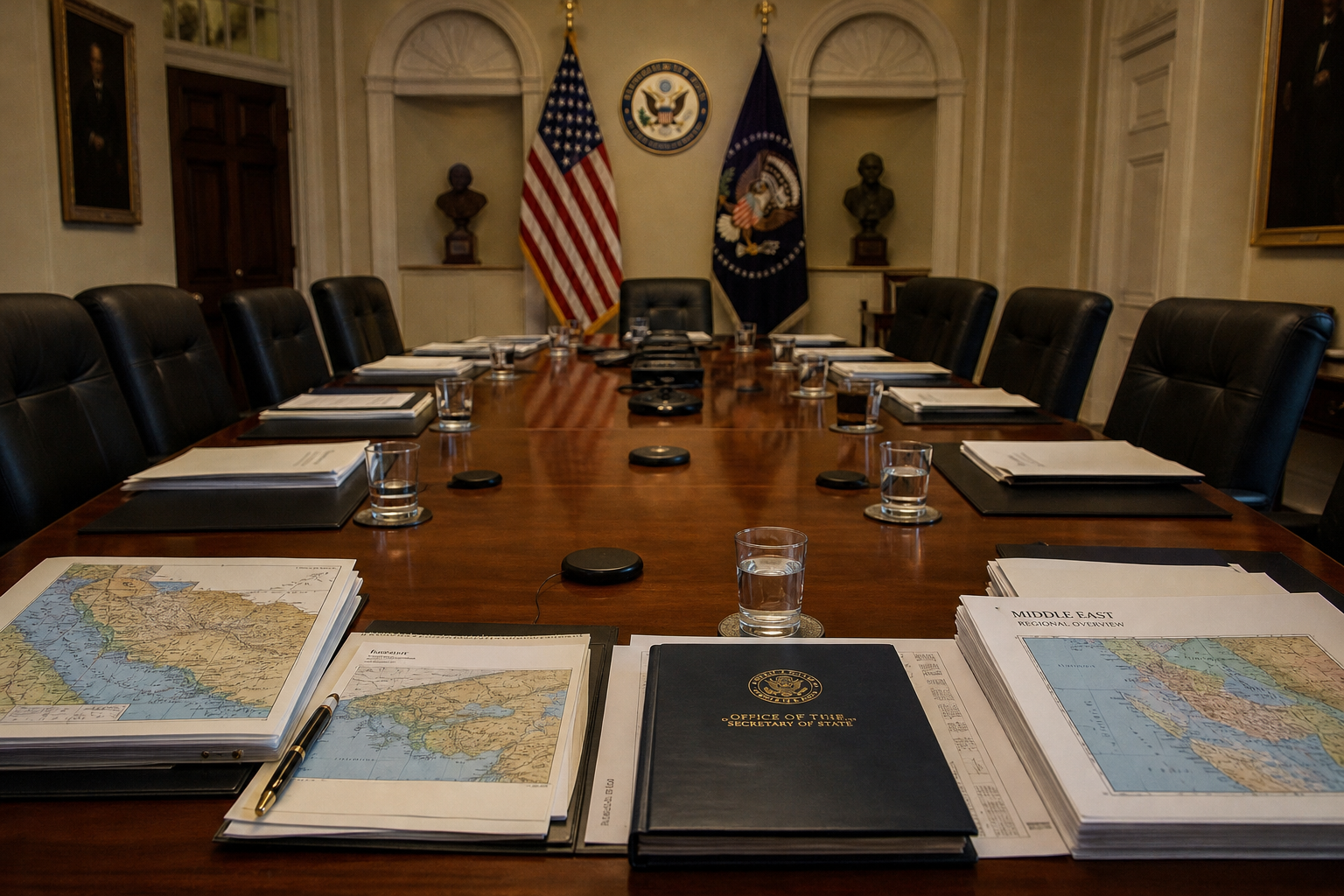
The Reality of War Fatigue in American Opinion
Polling data consistently shows that Americans are exhausted by decades of military involvement in the Middle East. This is not a partisan sentiment confined to one wing of the political spectrum; it crosses ideological lines and demographic groups. What matters now is how policymakers, particularly those in Washington, interpret and respond to this fatigue without abandoning either American security interests or our commitments to allies in the region.
The question before us is straightforward but difficult: How do we balance the legitimate war weariness of the American public with the genuine security challenges that persist in one of the world's most volatile regions? This tension has long existed in American foreign policy, but it demands fresh thinking and intellectual honesty rather than slogans or wishful thinking.
Understanding the Roots of Fatigue
Americans have watched military operations unfold in Iraq, Afghanistan, Syria, and elsewhere for more than two decades. Multiple administrations, both Republican and Democratic, have expanded or sustained these commitments even as public support has gradually declined. The costs are real: American lives lost, resources expended, and the opportunity costs of investments that might have gone elsewhere. These are not abstract grievances; they touch families and communities across the country.
The polling data reflects a rational conclusion: a generation of Americans came of age during wartime, and many have asked whether the military solutions pursued have delivered the promised results. This skepticism is healthy. It is the job of elected officials to answer it with clarity, not dismiss it as isolationism or cowardice.
The Conservative Framework for Foreign Policy
Institutional conservatism has always held that foreign policy must rest on clear national interests, not missionary zeal or nation-building ambitions divorced from American security. The neoconservative moment of the early 2000s, which emphasized democracy promotion and military intervention as tools of statecraft, has given way to a more sober reassessment of what American power can and should accomplish.
This does not mean indifference to events abroad or abdication of leadership. Rather, it means being precise about which threats warrant American response, which allies deserve support, and which commitments can be sustained over the long term without exhausting public support or stretching military resources beyond their limits.
The Middle East remains strategically important. American allies in the region face genuine threats. Energy security, counterterrorism, and the prevention of hostile powers from establishing unchecked regional dominance all remain legitimate concerns. The question is not whether America should care about the Middle East, but how we should calibrate our engagement given both the fatigue evident in polling data and the actual constraints on American power.
What the Data Tells Us
Recent polling reflects broad American skepticism about military solutions in the region. This sentiment appears consistent across geographic regions, education levels, and age groups, though the intensity varies. Conservative voters, contrary to some assumptions, are not uniformly hawkish on Middle East policy. Many support restraint and want American forces focused on direct national defense rather than open-ended regional involvement.
This creates an opportunity for principled leadership. Policymakers who acknowledge public war weariness while making a clear, evidence-based case for specific, limited commitments are more likely to maintain public support than those who either dismiss public opinion as naive or promise an impossible complete withdrawal.
Policy Implications for the Next Administration
Several principles should guide American foreign policy in response to this polling data:
- Clarity of Mission: Any military commitment must have defined objectives and an exit strategy. Open-ended nation-building operations have lost public support because Americans reasonably ask what victory looks like and when it comes.
- Burden-Sharing: American allies in the region possess their own militaries and resources. They should bear a greater share of the burden of their own security, with America providing support and coordination rather than sole responsibility.
- Prioritization: Not every regional conflict demands American intervention. Distinguishing between vital interests and peripheral concerns is a mark of strategic maturity, not weakness.
- Transparency: The public deserves honest assessment of costs, risks, and realistic outcomes. Overpromising and underdelivering corrodes both public trust and long-term support for necessary security measures.
The Institutional Conservative View
The American republic has endured by maintaining public support for its institutions and commitments. When government asks citizens to bear the costs of military action—in lives, resources, and national attention—it must maintain a principled conversation about why that burden is necessary. War weariness is not a character flaw in the American public; it is a natural response to decades of costly operations.
Conservatives should welcome this data not as cause for capitulation but as an opportunity to make the case for a more disciplined, clearly defined foreign policy that serves American interests without attempting to remake entire regions. Such an approach is neither isolationist nor indifferent; it is proportionate and sustainable.
The challenge for the next administration is to chart a course that respects genuine security imperatives while acknowledging the legitimate fatigue evident in public polling. That balance is difficult, but it is what responsible stewardship of American power requires.
