
When Good Intentions Meet Poor Oversight
Washington's response to homelessness has followed a familiar pattern: acknowledge a crisis, increase spending dramatically, and trust that agencies on the ground will steward the resources wisely. A recent federal crackdown on fraud within homeless services agencies suggests that pattern has broken down in several of the nation's largest cities.
Investigators have documented cases of agency executives misappropriating funds, inflating service numbers to justify budgets, and failing basic financial controls—all while homelessness in these cities has remained stubbornly high or grown. The findings should prompt a serious reckoning about whether current spending models actually address the problem or simply create a bureaucratic ecosystem insulated from accountability.
The Gap Between Spending and Results
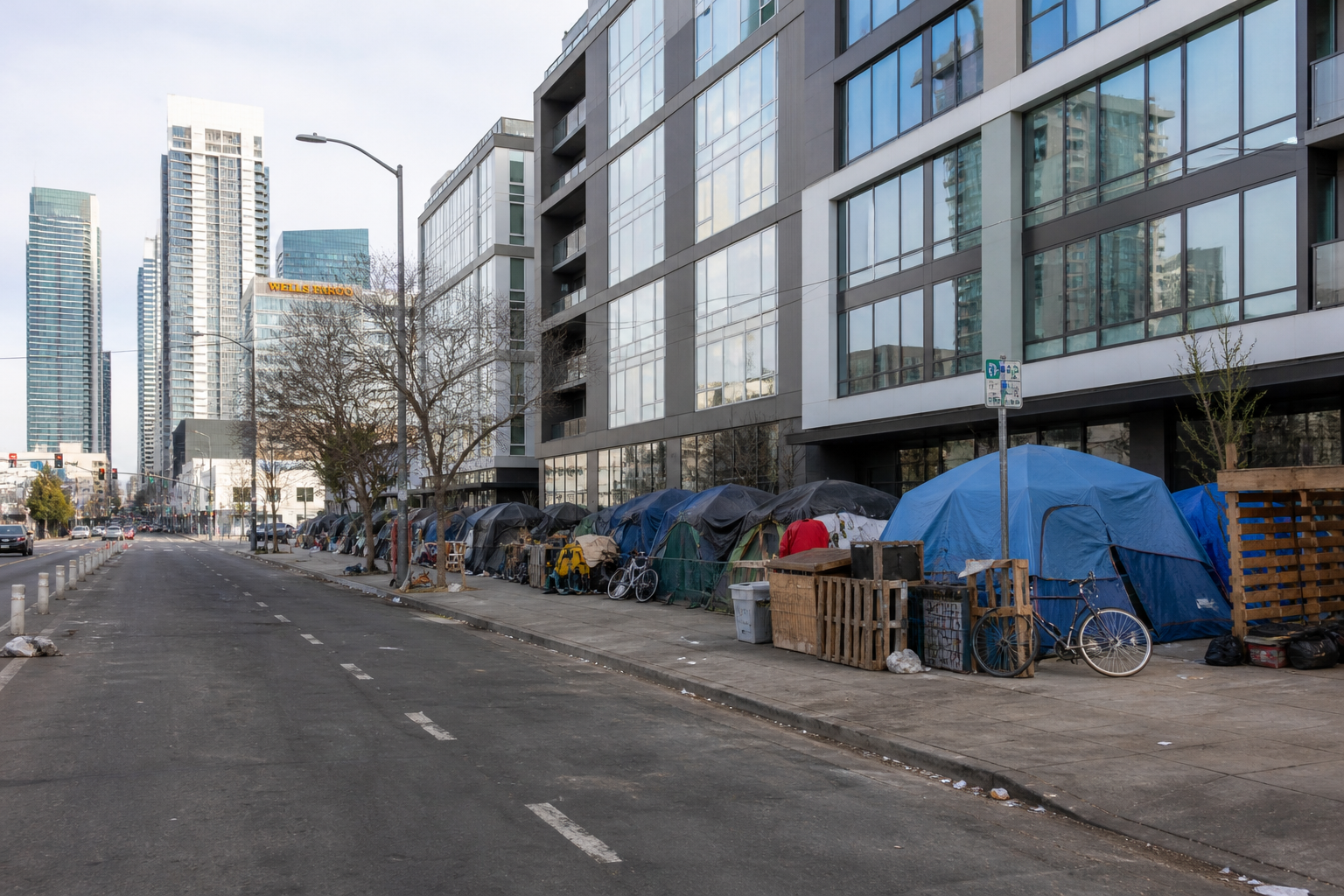
Blue cities and their surrounding metropolitan areas have increased spending on homelessness services significantly over the past decade. Los Angeles, San Francisco, New York, and Seattle have collectively poured billions into the issue, expecting measurable progress in reducing street homelessness, connecting people to shelters, and facilitating permanent housing placements.
Yet in many of these cities, the homeless population has not declined proportionally to the increase in spending. This disconnect has long troubled observers across the political spectrum, though for different reasons. Progressives often argue the problem requires even more resources and systemic changes. Conservatives have pointed to inefficiency, mismanagement, and perverse incentives baked into the existing system.
The fraud investigations now provide concrete evidence that at least part of the problem is not conceptual but operational: money meant to help homeless individuals is being diverted, misused, or spent on administrative overhead that produces little benefit to vulnerable populations.
A Question of Institutional Design
Fraud is not unique to homelessness spending, nor does it explain all inefficiency in these programs. But the pattern that federal investigators have uncovered points to a deeper structural problem: the absence of clear lines of accountability.
Many homeless services agencies operate as nonprofits with government contracts, creating a buffer between elected officials and operational decisions. When a nonprofit executive misuses funds or inflates statistics, the city agency that funded them can claim limited visibility into internal practices. Meanwhile, the nonprofit board—often composed of well-intentioned but part-time members—may lack the expertise or access to perform rigorous oversight.
This arrangement can shield both government and nonprofit leadership from consequences. A city official can claim they provided resources and trusted partners to deploy them. A nonprofit executive can blame inadequate government support or shifting needs on the ground. Neither party faces the direct accountability that comes when a single institution owns both the problem and the solution.
The Role of Perverse Incentives
Homelessness services funding creates inherent perverse incentives. An agency is typically funded based on the size of the population it serves or the number of interventions it provides. This structure can reward agencies for maintaining large client populations rather than solving cases. If success means fewer homeless people to serve, it means less funding next year.
Well-managed agencies can overcome this incentive by committing to actual outcomes—permanent housing placements, jobs secured, addiction treatment completed. But agencies that lack rigorous leadership or external oversight may drift toward simply managing poverty rather than alleviating it. Add financial fraud to that institutional dysfunction, and the gap between spending and results becomes wider still.
What Accountability Should Look Like
Addressing this problem does not require abandoning efforts to help homeless populations. It requires redesigning how cities structure, fund, and oversee those efforts.
First, cities should demand measurable outcomes tied to actual placements and sustained housing stability, not simply the number of beds available or meals served. An agency should demonstrate not just that it spent money, but that it moved people from homelessness into stability.
Second, government agencies should maintain direct operational control over core services rather than outsourcing to nonprofits without rigorous auditing. This means more public employees and tighter budget management, but it also means clearer lines of accountability when things go wrong.
Third, elected officials should resist the impulse to announce new spending increases without first accounting for how existing funds have been used. The question "Where did the last billion go?" should be answered honestly before voters approve the next billion.
The Broader Lesson
These fraud cases offer a cautionary tale about the limits of good intentions in governance. Increasing spending is politically easier than reforming how money is spent. Creating new agencies and nonprofit partnerships is easier than holding existing institutions accountable. But the gap between effort and results persists.
Homelessness is a genuine problem that demands serious attention and resources. But throwing money at the issue without insisting on institutional reform, clear accountability, and measurable outcomes is a recipe for the pattern we see in many major cities: more spending, persistent homelessness, and now, evidence that some of the resources intended for the most vulnerable are being lost to fraud and mismanagement.
That failure reflects not on the homeless themselves but on systems of governance that have lost touch with basic principles of accountability and results. Fixing that failure requires not more trust in existing institutions, but more demand for evidence that they are actually working.
