
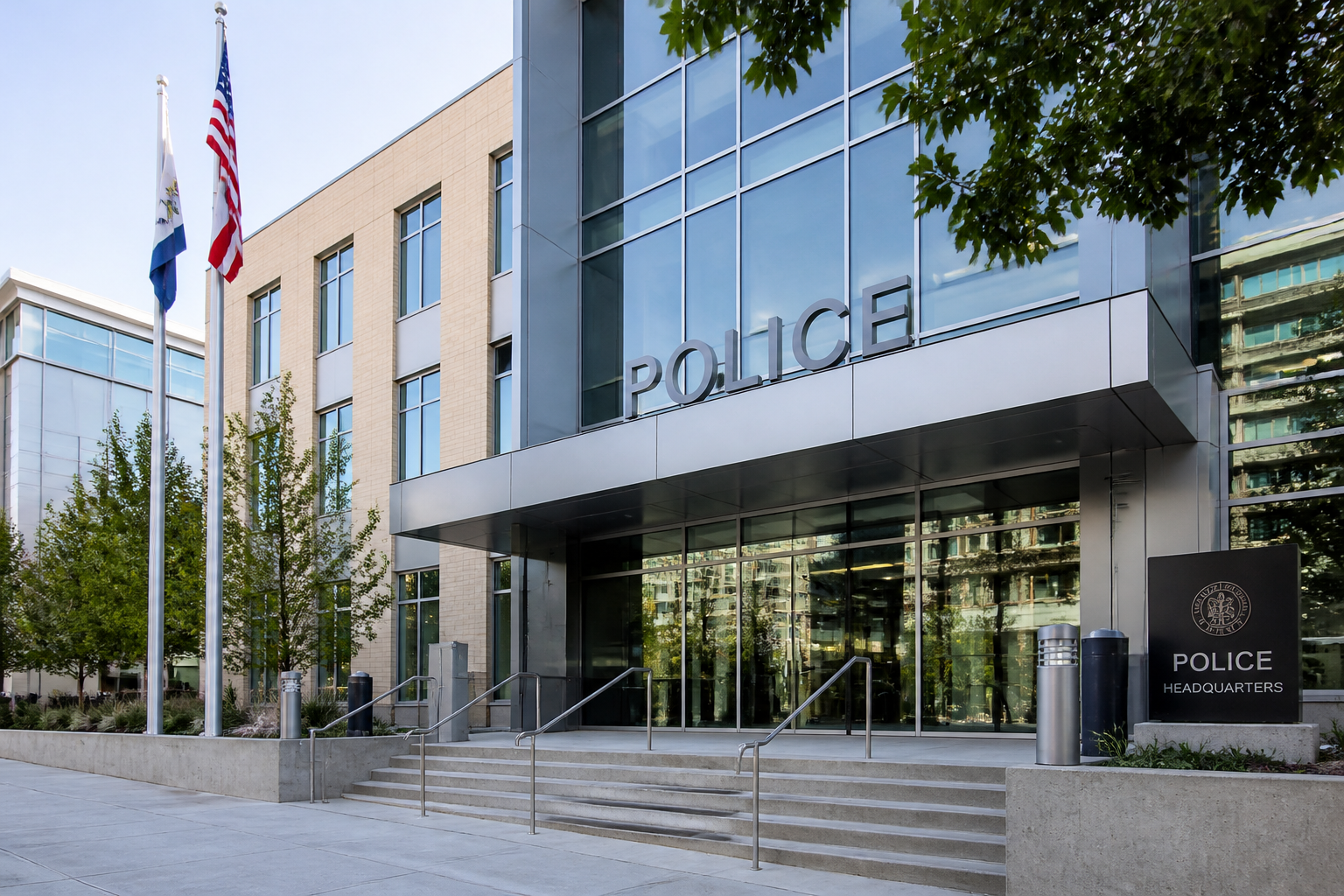
When Police Units Dissolve, Who Fills the Void?
New York City's decision to disband an elite unit within its police department has reignited a familiar debate about public safety, protest management, and the proper scope of law enforcement in a democratic city. The move reflects genuine disagreement about how to balance order with the right to dissent—a tension that has defined American civic life since its founding.
To understand what happened and why it matters, some context is necessary. The unit in question was designed to respond to large public demonstrations, tasked with maintaining order during protests while theoretically protecting both demonstrators and the broader public. In a city of eight million people, managing peaceful assembly while preventing property damage and violence is a genuine operational challenge. No serious person disputes that.
What is genuinely disputed is whether specialized police units dedicated to protest response represent sound policy or an overreach in domestic surveillance and control. This is not a trivial disagreement, and it deserves to be treated as one about legitimate competing values rather than a simple matter of good versus bad actors.
The Case for Specialized Units
Supporters of protest-response units argue that trained, dedicated personnel can handle volatile situations with greater discipline and restraint than generalist officers improvising on the fly. The logic is straightforward: if you need a specialized response, you train specialists. Fire departments don't ask general firefighters to handle hazmat incidents; they maintain specialized teams. By this reasoning, protest management warrants similar preparation and training.
There is also the matter of public order itself. Cities depend on predictable, lawful commerce and peaceful streets. When protests become riots—when windows are broken, fires are set, and ordinary citizens cannot move safely through their neighborhoods—that is not an exercise of First Amendment rights, it is vandalism and destruction of property. A democratic city has not only the right but the responsibility to prevent that outcome.
Measured conservatives have long believed that public order is a prerequisite for freedom, not its opposite. Without it, the strong prey on the weak, and civil society collapses into chaos. That principle should not be dismissed simply because activists criticize how it is applied.
The Case Against
Critics of specialized units argue that such units can become tools of political control, used less to prevent actual violence and more to intimidate protesters, suppress dissent, and conduct surveillance on activist organizations. There is historical warrant for this concern. Police departments have used protest infiltration, surveillance, and provocative tactics in ways that have drawn criticism from across the political spectrum.
Moreover, some argue that the existence of specialized units creates a kind of institutional bias toward their deployment. Once an agency has trained officers in protest response, there is an incentive to use those skills, even when situations might be better handled through negotiation, de-escalation, or simple restraint. This is a recognized problem in organizational behavior: specialized units tend to specialize.
These concerns deserve serious engagement. Conservatives who care about constitutional government and limited police power should take them seriously, not dismiss them out of hand as mere anti-police sentiment.
What Actually Changed?
The practical question is what has replaced this unit. If dissolution of a specialized team simply means that general police officers—potentially less trained in de-escalation and crowd management—will handle future protests, that may actually make matters worse, not better. If it means that protest response is transferred to a different agency or handled through different protocols altogether, the outcome depends entirely on what those alternatives are.
This is where the analysis often breaks down in public debate. Critics and supporters both speak past each other: the former celebrating the end of a unit they viewed as oppressive, the latter warning that chaos will follow, without either side carefully examining what actually replaces the old system and whether it is likely to be more or less effective, more or less respectful of rights.
The Deeper Issue
Underlying this dispute is a question about institutional trust. Do New Yorkers trust their police leadership to use specialized units responsibly, within constitutional bounds? Do they believe oversight and training prevent abuse? For many, the answer has become no, and that erosion of trust is itself a form of institutional damage that cannot be repaired simply by organizational charts.
Rebuilding that trust requires more than dissolving units. It requires transparency, accountability, rigorous training standards, and demonstrated restraint over time. It requires police leadership that visibly respects constitutional limits and treats protesters—even ones they view as troublemakers—as citizens whose rights matter.
Conservatives who reflexively defend every police decision miss an important point: institutions that lose public confidence cease to be effective, even if they remain technically powerful. A police force that the public fears or resents will find its job harder, not easier, and will invite more scrutiny, not less.
Looking Forward
The practical test of this policy change will be in its execution. If street-level order deteriorates markedly, if protest spaces become venues for property destruction and violence without consequence, then the case for some form of specialized response will have been proven. If, conversely, protests continue to function peacefully while public trust in police increases, then the case for a different approach will have been validated.
This is an area where Americans of goodwill can reasonably disagree. The question is not whether public order matters—it does—but how best to achieve it in a free society. That answer will depend on facts, evidence, and the actual performance of whatever system replaces the old one.
