
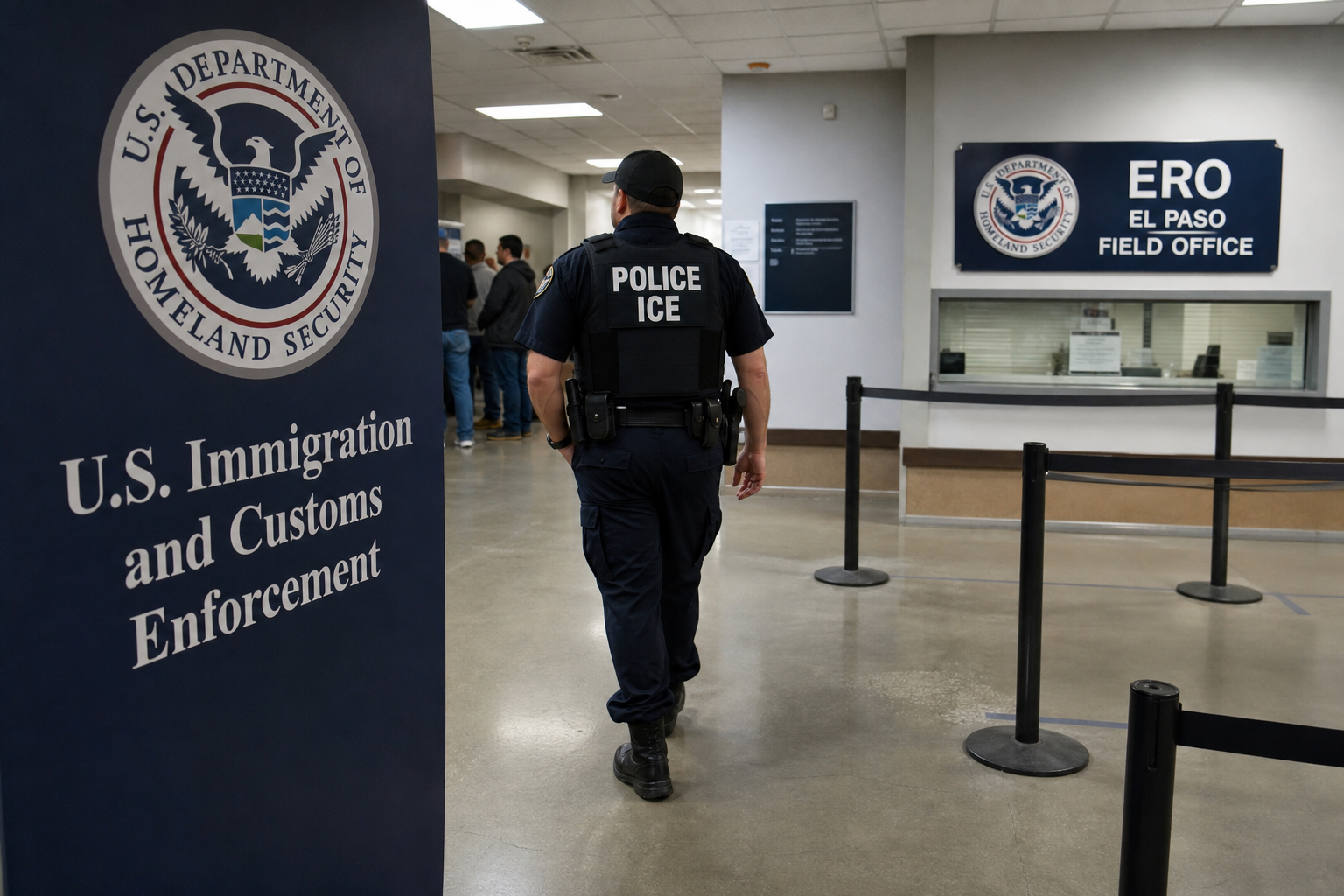
The Growing Black Market in Fraudulent Federal Law Enforcement Credentials
Immigration enforcement has always required a delicate balance: agents need the authority to conduct lawful operations, yet that very authority makes the documents they carry valuable targets for those seeking to circumvent the system. A troubling trend now emerging is the proliferation of counterfeit federal law enforcement credentials used to facilitate immigration fraud and identity theft.
The scope of this problem is significant enough to warrant serious attention from both federal authorities and policymakers. Fraudsters are creating fake badges, credentials, and identification cards purporting to represent Immigration and Customs Enforcement (ICE), Customs and Border Protection (CBP), and other federal agencies. These forgeries are then used to prey on undocumented immigrants, extort citizens, and enable smuggling operations.
How the Fraud Networks Operate
The mechanics of these schemes are straightforward but effective. Criminal networks obtain or manufacture counterfeit credentials—sometimes with impressive technical sophistication—and then deploy them in several ways. Perpetrators impersonating federal agents can extort money from immigrants by threatening deportation. They can facilitate illegal border crossings by posing as legitimate officials who have been "paid off." Others use the false credentials to gain access to secure facilities or to establish credibility with accomplices in larger smuggling networks.
The quality of counterfeit materials varies. Some are crude reproductions that would fool no one with genuine knowledge of official credentials. Others are sophisticated enough to pass casual inspection, incorporating accurate security features, holograms, and watermarks. This variance reflects the decentralized nature of the criminal enterprise—different cells operate with different resources and technical capabilities.
The Institutional Failure
From a conservative institutional perspective, this problem reveals a gap in federal security and coordination. Credentials are, by definition, instruments of authority that depend entirely on their integrity. When they can be forged and circulated with relative ease, the authority they represent is undermined. This is not merely a problem of individual criminal acts; it represents a systemic vulnerability in how federal agencies protect the symbols and tools of their own authority.
The challenge is compounded by jurisdictional complexity. Immigration fraud involves multiple federal agencies, and coordination among them—while improving—has historically been uneven. Local law enforcement often lacks the resources or expertise to investigate sophisticated counterfeit credential schemes. The Secret Service, which has traditional jurisdiction over federal document forgery, has finite capacity. The result is a patchwork of enforcement efforts that may not adequately address the scale of the problem.
Why This Matters for Immigration Policy
The existence of counterfeit federal credentials has real policy implications. It complicates legitimate immigration enforcement by making it harder for actual federal agents to establish their authority in the field. It erodes public trust in the immigration system itself, creating situations where immigrants and citizens alike struggle to distinguish legitimate enforcement from fraud. When criminals can impersonate federal agents with relative impunity, the boundary between lawful authority and criminal activity becomes dangerously blurred.
This problem also highlights the importance of physical and document security in any functional government system. Immigration enforcement depends on the ability of federal agents to establish their identity and authority quickly and credibly. If that authentication can be defeated by forged documents circulating in black markets, the entire system is weakened.
The Path Forward
Addressing this issue requires a multi-layered approach rooted in institutional competence rather than dramatic legislative gestures. First, federal agencies should continue improving the security features of their credentials to stay ahead of counterfeiting technology. This is an ongoing technical challenge—as security features improve, so do the tools available to criminals—but it remains essential.
Second, inter-agency coordination on document fraud investigations needs strengthening. Immigration enforcement, the Secret Service, the FBI, and local law enforcement should have clear protocols for investigating counterfeit credential schemes. Intelligence sharing about networks, techniques, and materials should be improved.
Third, penalties for producing and distributing counterfeit federal credentials should be clear and enforced consistently. Federal statute already provides for severe penalties in such cases, but awareness of those penalties—and consistent prosecution—serves as both deterrent and evidence of institutional seriousness about the problem.
Finally, public education matters. Immigrants, employers, and citizens who might encounter someone claiming federal authority should understand what legitimate credentials actually look like and how to verify an agent's identity through independent channels. This is not a substitute for enforcement, but it can disrupt the confidence schemes that make counterfeit credentials effective in the first place.
Conclusion
The emergence of organized black markets in counterfeit federal credentials is symptomatic of a broader vulnerability in immigration enforcement infrastructure. It is not a failure of will or policy philosophy, but rather a technical and institutional challenge that requires sustained attention from federal agencies. Conservatives rightly emphasize the importance of functional, well-managed government institutions; this problem shows why that emphasis is warranted. A credible immigration system depends on the credibility of the agents and documents that enforce it. When that credibility can be easily counterfeited, the entire endeavor is compromised.
