
Iran's Strike on Kuwait Base: Escalation and American Strategy Recalibration
When Iran launched strikes against U.S. military assets in Kuwait this week, it marked another escalation in a cycle of regional tit-for-tat that has defined Middle Eastern security policy for the better part of two decades. The strikes themselves—reported to target American personnel and installations—were met with firm condemnation from Washington and careful diplomatic maneuvering from regional allies who have little interest in seeing the Persian Gulf turn into an active war zone. For those watching American foreign policy, the incident raises urgent questions about escalation control, deterrence, and what the limits of American patience actually are in a region where we maintain substantial military commitments.
The Pattern and the Stakes
What is striking about this latest episode is not really its novelty, but its familiarity. The cycle is well-worn: a provocation, a measured response, a counter-escalation framed as justified retaliation, and then a period of uneasy calm before the cycle begins again. Each iteration involves calculations about what the other side will tolerate, and each relies on the assumption that neither party genuinely wants a full-scale conventional conflict. Iran's leadership understands that direct confrontation with American military power would be catastrophic for the regime. The United States, for its part, has made clear that it prefers limited engagement to the kind of sustained ground campaign that would require indefinite commitment and massive resources.
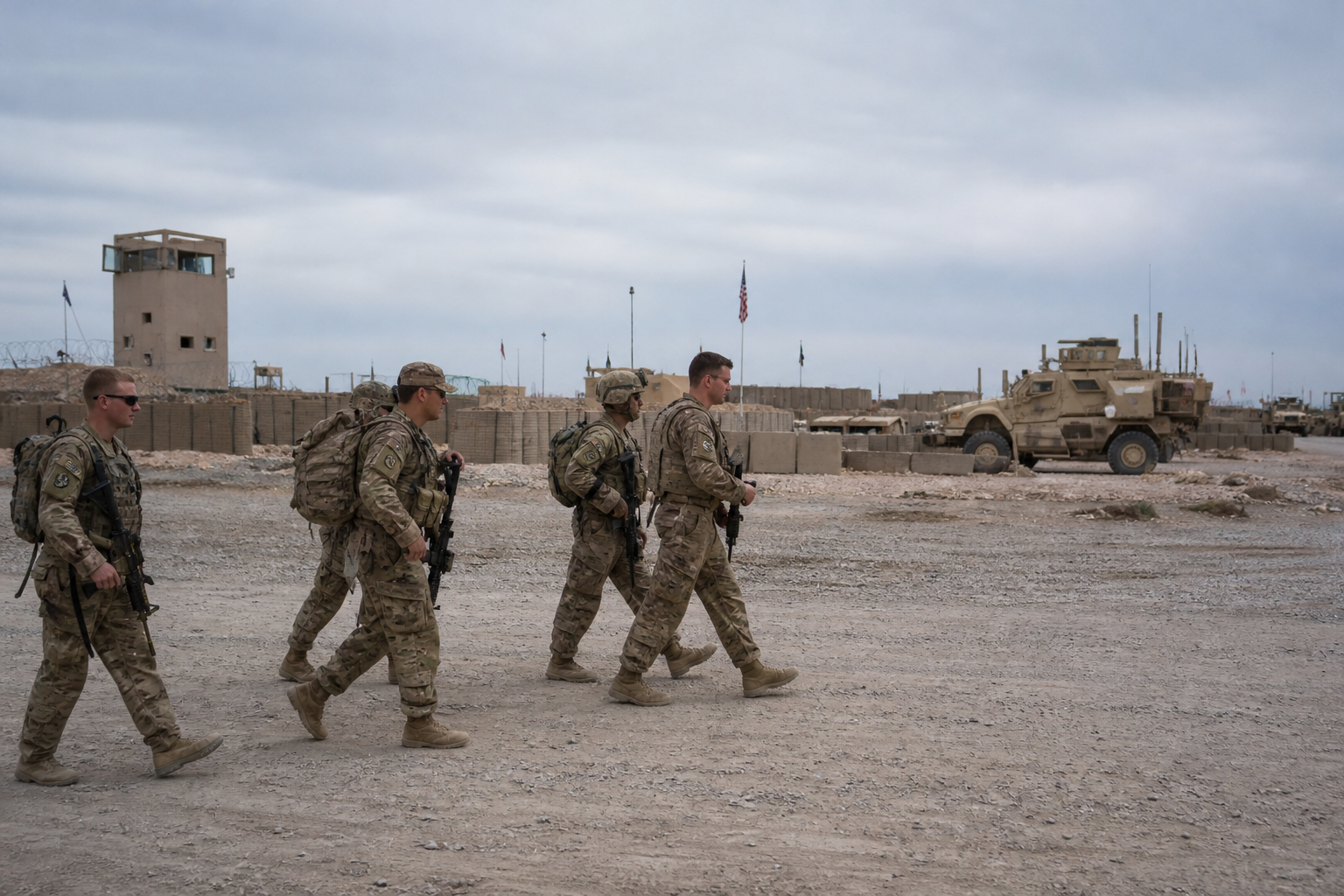
What makes this dynamic dangerous is not the rationality of the actors involved, but the sheer number of pressure points where miscalculation becomes possible. Kuwait itself sits at the center of that vulnerability. It hosts one of the largest concentrations of American military personnel in the region outside of the broader Middle Eastern theater. Any attack there carries real risks: American personnel can be killed, relations with Kuwait—a formal ally—can be strained, and the optics of American vulnerability can embolden other actors who have been watching the broader trajectory of U.S. commitment in the region.
Deterrence in an Age of Ambiguity
The fundamental challenge facing American defense planners is one of deterrence messaging. What, exactly, is the United States deterring Iran from doing? A full-scale invasion of a Gulf state? Attacks on American forces themselves? Support for proxy militias? The answer matters immensely, because different thresholds require different credible threats. If the goal is to prevent Iranian regional domination, one calculus applies. If it is simply to protect American military installations and personnel, another follows. And if it is to preserve the basic stability of global oil markets, still another set of considerations emerges.
The strikes in Kuwait suggest that Iran believes it has room to conduct harassment operations against American assets without triggering a response large enough to threaten regime survival. That belief—whether accurate or not—is itself a problem. It indicates that the deterrent effect of American military superiority may be fraying, or at least that Iran's calculus about what the United States will accept has shifted.
The Institutional and Strategic Questions
Conservatives have long held that American security commitments mean nothing if they are not credible, and credibility depends on a demonstrated willingness to respond to aggression. But responding is not simple in a region as complex as the Middle East, where every military action carries diplomatic costs, risks escalation, and can have unpredictable consequences. The Trump administration's withdrawal from the Iran nuclear deal and subsequent maximum pressure campaign set a particular tone: confrontation rather than negotiation, deterrence rather than engagement. The Biden administration took a different approach, attempting to rebuild diplomatic channels while maintaining military posture. Now, under new leadership, the question is what strategy will actually guide policy.
What is clear is that ad hoc responses, however forceful, are not sufficient to establish lasting deterrence. Iran needs to understand not merely that the United States can strike back, but that the costs of continued aggression will outweigh any perceived benefits. That requires not just military capability, but strategic coherence—a clear sense of what American interests are, what red lines exist, and what the actual consequences of crossing them will be.
The Allies Question
It is also worth noting that Kuwait, Saudi Arabia, and the other Gulf Cooperation Council states have shown considerable restraint and pragmatism in their own responses to Iranian aggression over the years. They understand, perhaps better than policymakers in Washington, that escalation spirals in the Persian Gulf carry catastrophic economic consequences. Their oil production, their financial markets, and their own security depend on a region that functions rather than one locked in open conflict. That places a particular responsibility on American strategy: our allies need assurance that American military presence is stabilizing, not a magnet for Iranian strikes that will drag them into unwanted conflicts.
Looking Forward
The path forward likely involves a combination of deterrent messaging, careful diplomatic channels to prevent further escalation, and a clear articulation of American interests and red lines. The current administration should use this moment to establish, plainly and publicly, what Iran can and cannot do without triggering significant American response. That clarity, rather than ambiguity, is what actually deters aggression. It is also worth considering whether the current force posture in the region is calibrated correctly—whether the balance between maintaining deterrence and avoiding provocation is appropriately struck.
None of this is to suggest that military restraint is weakness, or that diplomacy is appeasement. Rather, it is to insist that American strategy in the Middle East needs to be coherent, sustainable, and based on clear reasoning about what interests we actually have and what we are willing to spend to protect them. The strikes in Kuwait are a reminder that those questions remain urgent and unresolved.
