
When Systems Fail, the Gaps in Our Infrastructure Become Visible
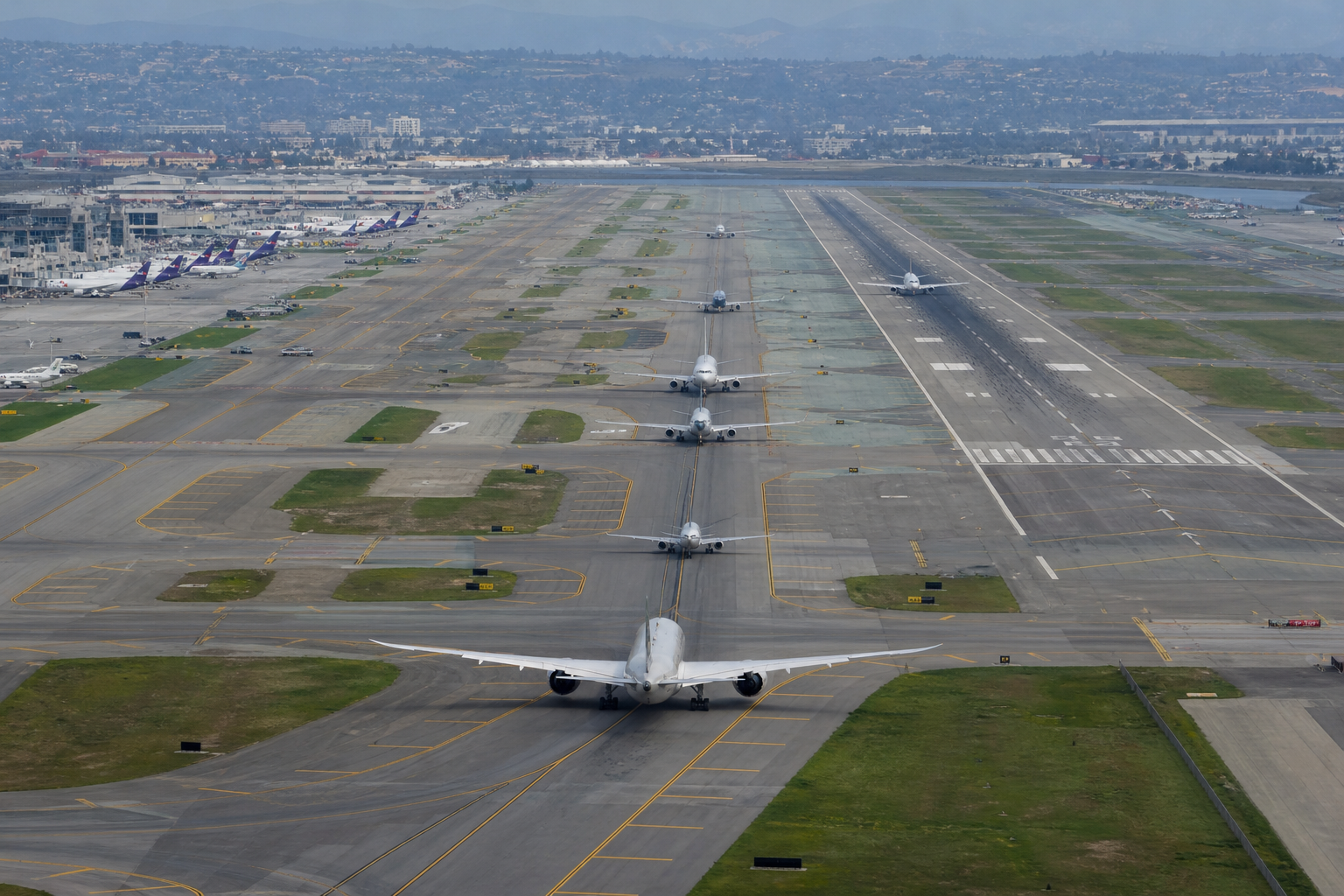
Last week's ground stop at American airports served as a sharp reminder of a fact that policymakers and citizens alike often prefer to ignore: the systems that undergird modern life are, in many cases, aging, underfunded, and more fragile than their apparent permanence suggests. When the Federal Aviation Administration issues a ground stop, the disruption is immediate and widespread. Thousands of flights are delayed or cancelled. Passengers miss connections. Commerce stutters. And for a brief, clarifying moment, the machinery that keeps the republic functioning becomes visible.
The incident raises uncomfortable questions about how America maintains its critical infrastructure, who bears responsibility for modernization, and whether our current approach to these essential systems is adequate to the demands placed upon them. These are not questions that lend themselves to easy political answers, but they are questions that conservatives should take seriously.
The System Under Strain
The National Airspace System handles roughly 45,000 flights per day under normal circumstances. That staggering volume—coordinating thousands of aircraft in the sky at any given moment, each one traveling at hundreds of miles per hour—depends on a network of radar facilities, communication systems, and human air traffic controllers working in dozens of control towers and facilities across the country. The sophistication required is immense. The margin for error is virtually nonexistent.
Much of the technology underlying this system dates to the 1960s and 1970s. Some facilities still operate on equipment that is decades old. While periodic upgrades occur, the pace of modernization has not kept stride with either the growth in air traffic or the technological capabilities available to replace legacy systems. This is not a failure of one administration or one party; it reflects a chronic American problem: the difficulty of mobilizing sustained investment in systems that work, that remain largely invisible to the public, and that therefore generate little political urgency until they fail.
Who Bears the Cost?
Modernizing air traffic control is expensive. The Next Generation Air Transportation System (NextGen) initiative, launched years ago, has seen partial implementation but faces the perennial challenge of all infrastructure modernization: upfront costs are large, benefits are diffuse, and the political will to fund such work competes constantly against more visible, immediate budgetary demands.
There is a legitimate debate about how such modernization should be financed. Should it fall to the federal government, which oversees the airspace? Should the aviation industry itself bear a greater share, given that commercial aviation benefits directly? Should users—airlines and, indirectly, passengers—pay more through ticket taxes and fees? A conservative approach to this question would start from first principles: government should be responsible for the core public good (maintaining safe airspace), but private entities that benefit from reliable infrastructure should have skin in the game. The current arrangement, in which federal funding covers much of the cost but industry groups lobby constantly over their share of expenses, reflects a failure to think clearly about these incentives.
The Institutional Question
There is also a governance problem worth examining. The FAA, like many federal agencies, operates under structural constraints that make rapid decision-making and adaptive management difficult. Its procurement processes are slow. Its ability to hire and retain specialized talent competes unfavorably with the private sector. The National Airspace System is too critical to be run on a shoestring, yet the bureaucratic structures designed to manage it often make efficient modernization harder, not easier.
Some have proposed semi-privatizing certain functions of air traffic control—a model used in other countries with considerable success. This idea deserves serious consideration, though it comes with legitimate concerns about safety and equity. A more modest reform might involve giving the FAA greater flexibility in procurement and personnel management, allowing it to operate more like a quasi-independent agency focused on its core mission rather than as a traditional cabinet department.
A Reminder of Interdependence
What troubles many conservatives about recent years is the sense that Americans have grown complacent about the infrastructure that enables their prosperity and security. We expect systems to work. We plan our lives around the assumption that planes will fly, power will flow, and water will run from the tap. This is, in some sense, a healthy sign—it means the systems are doing their job. But it also creates blindness.
When a ground stop occurs, it reminds us that we live within systems that are themselves dependent on sustained institutional competence, adequate funding, and human judgment. These are not glamorous facts. They do not inspire political movements or capture media attention until something breaks. But they are foundational to everything else we value: economic growth, public safety, the ability to plan and trust the future.
A Conservative Perspective on Infrastructure
Conservatism is often caricatured as indifference to public goods or opposition to government spending. This misses something essential: true conservatism respects institutions and understands that certain functions—national defense, transportation safety, border security—belong properly to government because they provide public goods that markets alone cannot supply.
The question is not whether to maintain air traffic control, but how to do so efficiently, with accountability, and with the humility to learn from other nations and from the private sector. It is not whether to fund modernization, but how to fund it fairly and to manage those funds with discipline and results-oriented oversight.
Last week's ground stop was inconvenient. But it was also instructive. It reminded us that the routines we take for granted rest on systems that require vigilance, investment, and competence. A healthy republic does not wait for crises to pay attention to such things.
