
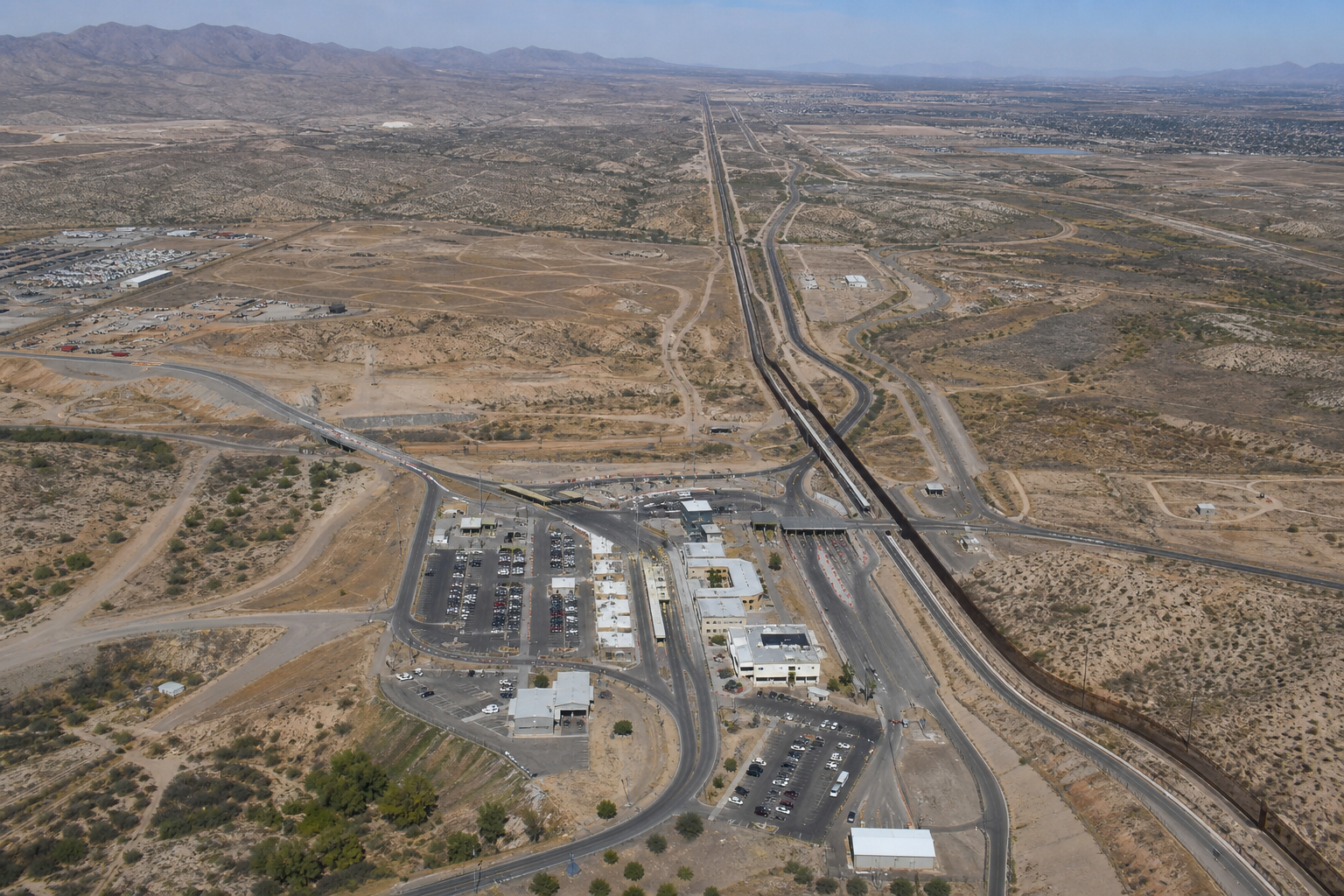
The Institutional Challenge Facing Border States
For months now, governors and state officials across Arizona, New Mexico, and Texas have faced an unglamorous but serious problem: the infrastructure serving their border regions is straining under unprecedented pressure. This is not a simple humanitarian crisis or a political talking point. It is a practical, fiscal, and institutional question about whether the systems built to manage normal conditions can sustain what has become the new baseline of operations.
The scope of the challenge is real. Border communities report increased wear on roads used for transporting migrants and asylum seekers to processing centers. Emergency rooms in towns near crossing points have added capacity beyond what they were designed to handle. Water systems, already stressed in an arid region, face additional demand. Detention facilities, processing centers, and local law enforcement coordination hubs are operating at or beyond their rated capacity. For state officials tasked with maintaining basic services, the question is not ideological—it is logistical.
Where Federal and State Responsibilities Collide
This situation illustrates a broader tension in American federalism. Border control and immigration enforcement are primarily federal responsibilities, established under the Constitution's commerce and naturalization clauses. Yet the physical and social infrastructure absorbing the consequences—hospitals, roads, local law enforcement, social services—falls substantially on state and local budgets.
State officials from both parties have made similar complaints: they are asked to manage a federal challenge with state resources. Arizona and Texas have both deployed National Guard units to assist with monitoring and processing. New Mexico has activated state emergency management. These are extraordinary measures, typically reserved for natural disasters. Their use here reflects genuine institutional strain, not political theater.
The federal government, meanwhile, has provided some emergency assistance through existing appropriations and agency coordination, but state leaders argue the level of support is insufficient relative to the scale of the problem. Congress, for its part, has proven unable to pass comprehensive immigration reform or a sustained border-management appropriation, leaving states to improvise solutions within their existing budgets.
The Practical Costs of Institutional Ambiguity
Conservative governance depends on clarity of responsibility and accountability. When the federal government neglects its primary duty but leaves the consequences in the laps of states, it creates a moral hazard: neither level of government can be held fully accountable because neither possesses the full range of tools or resources needed to manage the problem effectively.
Border-state officials have attempted to work within this ambiguity. Some have sought federal reimbursement for emergency services and infrastructure strain. Others have negotiated directly with federal agencies—Customs and Border Protection, Immigration and Customs Enforcement, and the Department of Homeland Security—to coordinate operations. A few have attempted to close secondary crossings or redirect traffic to official ports of entry through state law enforcement activity, though such measures often face legal challenges grounded in federal preemption doctrine.
These ad-hoc arrangements reflect competent administration, but they are not a sustainable answer. State and federal officials are working to manage a problem that requires sustained policy decisions that neither level acting alone has the authority to make.
What Infrastructure Strain Reveals About System Capacity
The infrastructure pressure is not metaphorical—it manifests in specific, measurable ways. Water districts report usage spikes that outpace seasonal patterns. Road maintenance budgets stretch thinner as transportation corridors see heavier and more continuous use. Emergency medical facilities have added costs they did not budget for. Law enforcement agencies report overtime expenditures climbing faster than their appropriations can cover.
For most of these communities, this is not a crisis in the sense of imminent collapse. But it is a predictable degradation of service capacity. If the underlying conditions remain stable, infrastructure will continue to strain. If conditions worsen, the system may reach breaking points: a hospital unable to admit new patients, a water system unable to expand supply, roads unable to handle the load.
The traditional conservative response to such institutional strain would emphasize planning, capacity assessment, and clear authorization. What resources are actually needed? What is the projected timeline? Who bears the cost? How does this align with existing appropriations? These questions have largely gone unanswered in formal policy channels, leaving states to guess at what support they may receive and to prioritize based on incomplete information.
Toward Sustainable Solutions
A durable answer requires clarity on federal responsibility and adequate federal funding. This need not be controversial. The federal government has a constitutional duty to manage the border and to enforce immigration law. When that enforcement generates costs that cascade through state and local systems, the federal government should bear those costs—not as a political favor, but as a matter of institutional honesty.
At the same time, states should not use federal assistance as an excuse to avoid their own planning and coordination responsibilities. Southwest governors have shown willingness to work together on shared challenges; that coordination should continue and deepen.
Border-state infrastructure pressure is not the most visible political debate in Washington, and it will not resolve itself through speeches or appropriations theater. It requires sustained attention from federal agencies, Congressional committees, and state officials willing to have difficult conversations about capacity, cost, and responsibility. The citizens living in these communities deserve nothing less than systems designed to handle their actual circumstances, not wishful thinking about how those circumstances might change.
