
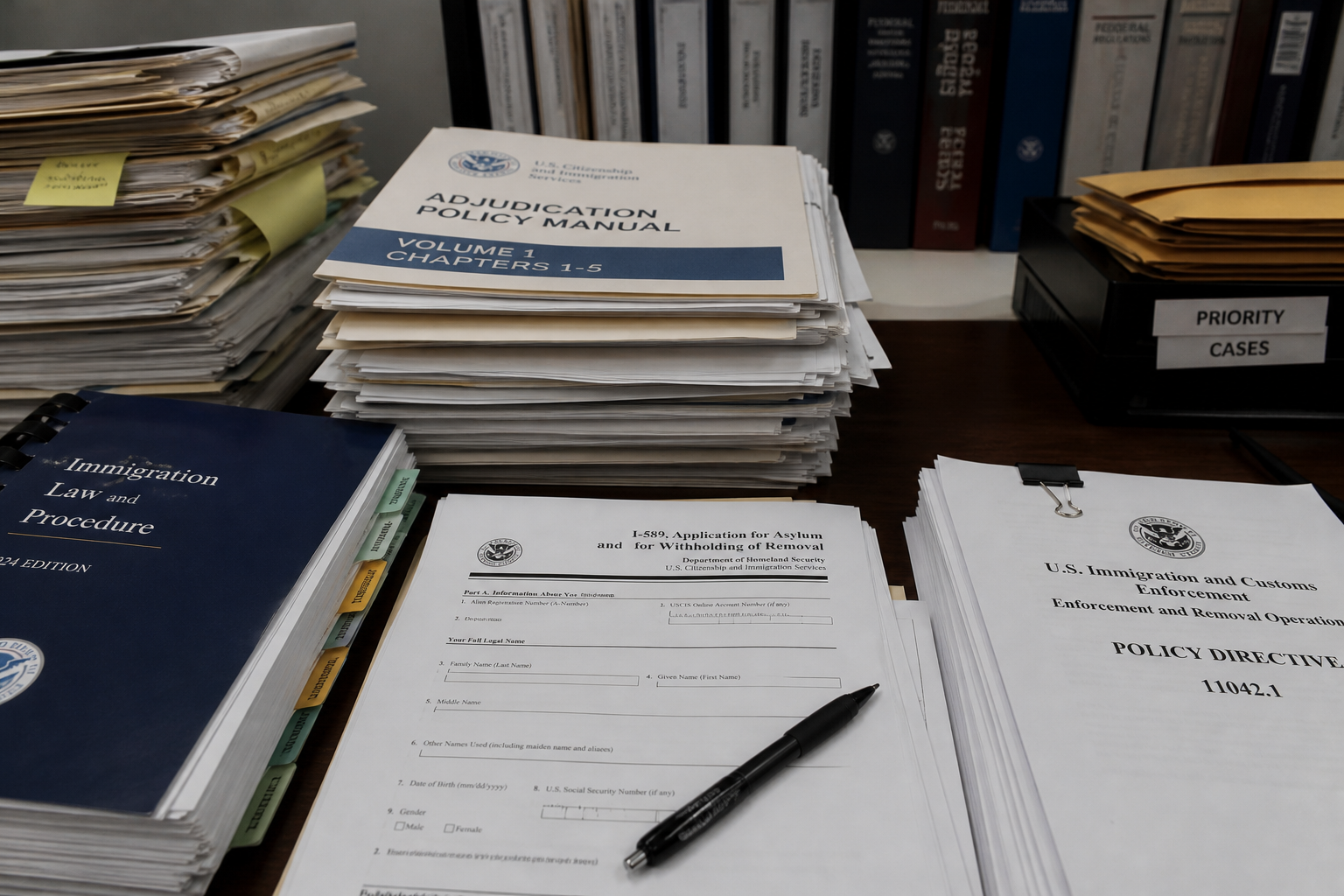
The Cost of Inconsistent Immigration Enforcement
Policymakers across the political spectrum agree on one point: government programs should reach those they were designed to help, and eligibility verification matters. Yet a gap has widened between that principle and its practice. When immigration enforcement remains inconsistent or incomplete, it creates cascading complications for social safety-net administration—and those costs ultimately fall to taxpayers.
The relationship between immigration status and welfare eligibility is straightforward in law. Most federal means-tested programs—food assistance, housing vouchers, Medicaid—impose citizenship or legal-permanent-resident requirements on beneficiaries. Yet the mechanism for verifying immigration status at the point of application has long been imperfect, and that imperfection has real fiscal consequences.
Verification Gaps Create Fiscal Exposure
A few structural problems compound the issue. First, federal immigration databases do not consistently communicate with state and local social-service systems in real time. A person may be flagged as deportable by immigration authorities in one jurisdiction while simultaneously enrolling in benefits in another. Second, some states have historically deprioritized immigration-status verification in welfare applications, treating it as a peripheral concern rather than a core eligibility gate. Third, the consequences for fraud—both for the applicant and for the administrator—have often been understated, creating weak incentives for rigorous checking.
The result is that some portion of federal and state welfare payments reach individuals who are not legally present in the country and therefore ineligible under statute. Estimates of the scale vary depending on methodology, but researchers and policy analysts across ideological lines have documented that the problem is real and measurable. When eligibility verification fails, the cost is borne by the taxpayer, and it represents money diverted from the program's intended beneficiaries.
Why Institutional Accountability Matters
From a conservative institutional perspective, the issue is not primarily about immigration ideology—it is about administrative integrity. When a government program sets eligibility rules, those rules should be enforced consistently. Failure to do so undermines public confidence in the program itself, blurs the line between legitimate assistance and fraud, and wastes resources that could help citizens genuinely in need.
The political challenge is that addressing welfare-eligibility fraud requires coordination across multiple agencies that historically have not prioritized that work. Immigration and Customs Enforcement operates according to deportation and criminal priorities. State welfare agencies are managed by officials focused on enrollment and service delivery, not immigration enforcement. The Internal Revenue Service verifies income but has no independent authority to verify immigration status. No single agency owns the problem, which means it tends to fall between the cracks.
Policy Solutions Require Interagency Discipline
Strengthening verification does not require new legislation in every case; much could be achieved through administrative reform and better data-sharing protocols. States could be required to use E-Verify or similar systems before disbursing benefits. The Social Security Administration could systematically cross-check welfare enrollees against immigration databases. Federal agencies could establish clear audit standards and hold state administrators accountable for verification compliance rates. These are workable, unglamorous reforms that fit within existing legal authority.
The alternative—allowing eligibility verification to remain lax—amounts to an implicit subsidy of illegal immigration paid for by taxpayers and by citizens who qualify for but do not receive benefits due to program constraints. That is not sustainable policy; it is a failure of institutional stewardship.
A Matter of Public Trust
There is a deeper principle at stake. When government programs fail to enforce their own eligibility criteria, they invite cynicism about government itself. Citizens observe that rules are not uniformly applied, that fraud goes unchecked, and that their tax dollars are spent contrary to law. That erodes not just support for a particular program but confidence in the capacity of government to manage resources responsibly.
Conservatives have long argued for smaller government partly on the grounds that large bureaucracies are difficult to oversee and prone to waste. That argument carries more weight when specific examples of waste are documented and allowed to persist. Conversely, demonstrating that government can manage its own programs with rigor and integrity—that it can verify eligibility, audit spending, and hold itself accountable—is the strongest counterargument to the charge that government is inherently incompetent.
The intersection of immigration and welfare fraud is not a referendum on immigration policy broadly, nor is it a question about the legitimacy of social safety nets. It is a straightforward matter of administrative discipline: if a rule is on the books, it should be enforced. Taxpayers deserve no less, and so do the citizens and legal residents who depend on these programs and have a rightful claim on their resources.
Fixing this does not require choosing between humanitarian concern for vulnerable populations and fiscal responsibility. It requires choosing competent governance. That is an argument worth making clearly, and an outcome worth pursuing methodically.
