
The Persistent Tension Between Entertainment and Civic Life
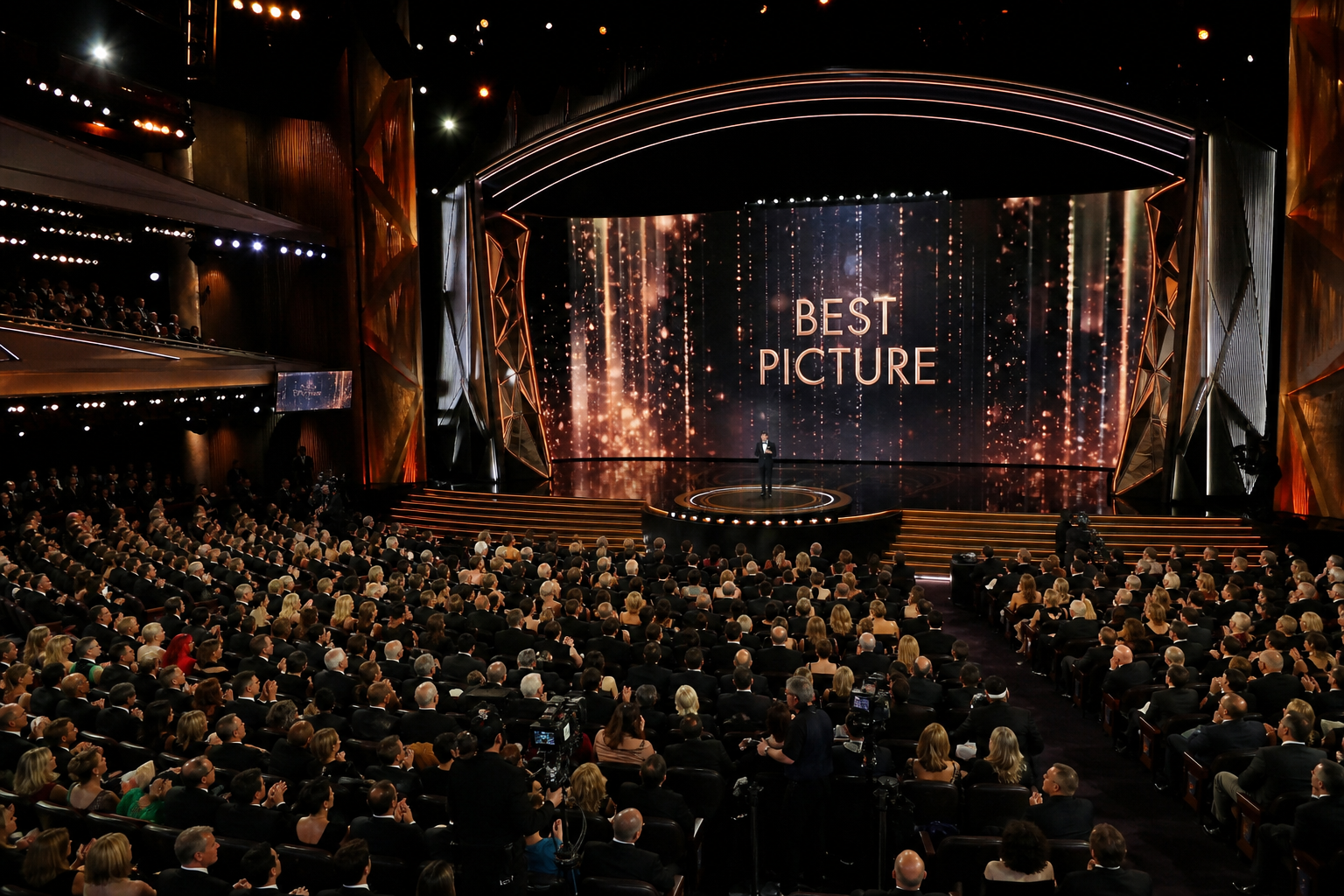
There is a persistent friction in American public life that surfaces with predictable regularity: the moment when a beloved actor, musician, or athlete steps away from their craft to deliver a political sermon, and millions of their fans must decide whether to applaud the message or mourn the loss of their entertainment. This week's latest episode in this ongoing drama—another prominent entertainer using an industry platform to make partisan statements—offers a useful moment to examine why the conservative case for boundaries between these spheres remains sound, even if it is increasingly unfashionable to make it.
The argument is not that celebrities lack the right to political speech. They do, in the same measure as any citizen. The question is narrower and more practical: what is lost when entertainment becomes a primary vehicle for political messaging, and what does a healthy civic culture require?
The Collapse of Institutional Separation
For much of American history, there existed a rougher separation between entertainment and politics than we see today. This was not a conspiracy or a formal rule, but rather an understanding rooted in function. Entertainment served one purpose: to offer escape, pleasure, artistry, and shared experience across lines of ideology and identity. Political advocacy served another: to persuade citizens of the merits of particular policies and candidates. The two occupied different terrain.
That separation has eroded substantially. The causes are numerous and partly structural. The rise of social media has collapsed the distance between a celebrity's personal views and their public presence. Cable news networks, hungry for content and star power, actively encourage entertainers to weigh in on political questions. The entertainment industry itself has become more explicitly ideological in its output and public posturing. And, frankly, the incentive structures have shifted: a political statement from a famous person generates engagement, outrage, and social media traffic in ways that pure entertainment often does not.
The result is an odd inversion: we now live in an age where a significant portion of the electorate encounters political argument through entertainment celebrities rather than through the traditional mechanisms of political persuasion—parties, campaigns, policy organizations, or civic institutions. This represents a peculiar dependency on the political preferences of people whose expertise lies in something entirely different.
Expertise and Democratic Judgment
This point deserves emphasis: there is no relationship between the ability to perform well on camera or stage and the ability to reason soundly about policy. Yet when an entertainer with millions of followers weighs in on a complex question of tax policy, foreign intervention, or regulatory reform, the sheer megaphone amplifies their words in ways that drown out more careful analysis from people who have actually studied the subject.
A conservative case for maintaining boundaries here is simply the case for democracy resting on reasoned persuasion rather than celebrity influence. Democratic citizens ought to make their choices based on arguments about the merits of competing visions—about liberty versus security, about the proper role of government, about the likely consequences of policy options. When political persuasion flows through entertainment channels and celebrity endorsement, it necessarily bypasses argument in favor of affinity.
This is not to say that ordinary people are dim-witted or easily manipulated. Rather, it recognizes a basic fact about human psychology: we are influenced by people we admire and like, often in ways we do not fully notice. Using that influence to drive political outcomes is a form of power that ought to trouble anyone who values democratic deliberation over celebrity authority.
The Cost to Entertainment Itself
There is also a practical cost to entertainment when it becomes a vehicle for political messaging. Art and entertainment have a unique power to reach across ideological divides precisely because they are not reducible to political argument. A film, a song, a performance can move an audience and create shared experience in ways that transcend partisan preference. The moment entertainment becomes primarily a tool of political persuasion, it loses that capacity.
Consider the experience of watching a film or attending a concert knowing that the performer is about to use the platform to deliver a political message with which you disagree. That knowledge changes the experience. Where there might have been transcendence, there is now calculation. Where there might have been escape, there is now contestation. This is a genuine loss, not merely to those who disagree with the message, but to the culture as a whole.
What Should Change
The institutional conservative position here is not to demand silence from entertainers or to restrict their rights. It is to call for a restoration of something like professional and cultural norms—not enforced by law, but by reasonable expectation and social habit.
That would mean: entertainers who wish to be serious political advocates should do so on their own time, under their own name, in plainly political forums. Industry platforms—awards shows, concert stages, broadcast airings—should be protected as spaces for entertainment rather than exploitation for political aims. The boundary is not absolute, but it is worth defending.
It would also mean that conservative and center-right audiences and institutions should resist the temptation to respond in kind. When one side weaponizes entertainment for political purposes, the reflexive answer is not to do the same on the other side, but to remember why the separation was valuable in the first place and to work to restore it.
The Larger Point
This is ultimately about what kind of democratic culture we want to inhabit. Do we want politics and civic judgment to flow through the choices of entertainers and celebrities? Or do we want citizens to encounter political argument in forms designed to encourage reflection rather than affinity? The answer, for anyone who values both self-government and the integrity of art, ought to be clear. The task now is rebuilding the norms that once protected that distinction—not through censorship, but through cultural expectation and the deliberate choice to keep some spaces separate from the political arena.
