
The Infrastructure Debate America Isn't Ready For
American innovation has always required difficult tradeoffs. We accept that highways disrupt neighborhoods and dams reshape valleys because the benefits—mobility, electricity, commerce—seem to justify the costs. Today, a quieter but equally consequential debate is unfolding across the country, pitting the infrastructure demands of artificial intelligence and cloud computing against the interests and autonomy of local communities. How America resolves this conflict will reveal much about how we balance growth with stability, and national interests with local governance.
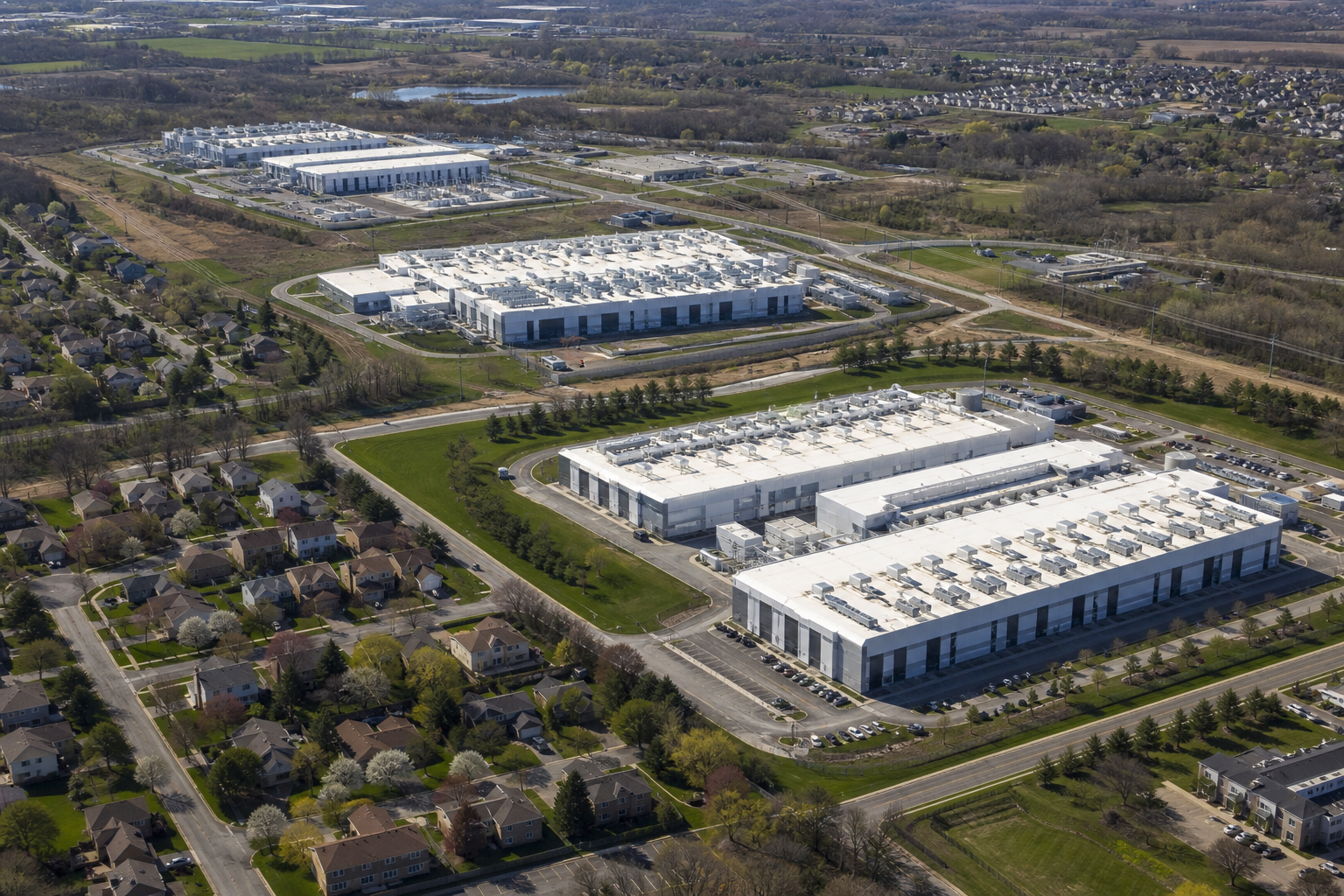
Data centers are not glamorous or visible to most Americans. They don't appear in campaign speeches or dominate cable news cycles. Yet they are fast becoming one of the most consequential land-use and infrastructure questions facing communities from Virginia to Arizona. These facilities—vast complexes requiring enormous amounts of reliable electricity, water, and cooling capacity—are being planned or built at an accelerating pace. The artificial intelligence industry is particularly demanding: training and operating large language models consumes vast quantities of power in ways that traditional data centers, which mostly store and manage existing information, do not.
The challenge is fundamentally one of geography and governance. Tech companies need locations with reliable power grids, affordable land, water access for cooling systems, and proximity to fiber optic cables. Rural and exurban communities often meet these criteria. Yet the arrival of massive data centers can strain local infrastructure, raise property taxes, alter the character of towns, and concentrate wealth and decision-making power in distant corporate hands. Residents of affected communities often have little say in the process until projects are already advanced or approved.
Where Technology Meets Local Authority
This conflict exposes real questions about how American federalism is supposed to work. Local governments have historically controlled land use through zoning and permitting authority. That principle—that communities have the right to shape their own character and future—is deeply rooted in American political tradition. Yet it can also enable parochialism: communities might block beneficial projects out of resistance to change, or demand concessions that effectively price out development altogether.
Tech companies argue, with some justice, that the nation's AI infrastructure needs are pressing and that excessive local regulation slows innovation and makes America less competitive globally. They point out that data centers create jobs, generate tax revenue, and provide the backbone infrastructure that consumers and businesses increasingly depend on. A data center is not inherently more destructive than a factory or commercial development. Done thoughtfully, it can coexist with surrounding communities.
But communities raising concerns are not necessarily acting from mere Nimbyism. Legitimate questions about water usage in drought-prone regions, strain on local power grids, and the permanence of massive industrial facilities deserve serious answers. When a town of 5,000 suddenly becomes host to a facility employing hundreds and consuming resources at an industrial scale, the disruption is real, and local residents bear much of the burden while profits flow elsewhere.
The Governance Gap
The real problem is that America currently lacks a coherent framework for making these decisions. State governments sometimes intervene to facilitate data center development, overriding local objections. Federal policy is largely absent. There are no clear standards for what communities should be consulted, what environmental and infrastructure impacts should be assessed, or what compensation or infrastructure improvements developers should provide. Companies and communities are left to negotiate one by one, with wildly inconsistent results.
A conservative approach to this problem should acknowledge a few principles. First, local authority over land use is a legitimate part of American self-governance and should not be carelessly overridden. Second, genuine national interests—including a robust domestic AI infrastructure—also matter and have a place in policy discussions. Third, transparency and honest negotiation between developers and communities is preferable to either heavy-handed state mandates or lawsuits and gridlock.
This might mean establishing clearer state-level guidelines for data center development that specify what environmental reviews are required, what local consultation must occur, and what developer contributions to local infrastructure improvements are appropriate. It might mean giving communities more authority to shape development patterns, even if that occasionally slows projects. It might mean requiring developers to make genuine commitments to local economic benefit beyond simply paying property taxes.
The Larger Picture
The data center debate is really about a more fundamental question: how does America maintain the capacity to innovate and compete while respecting the interests and authority of local communities? There is no answer that satisfies everyone completely. But the current ad-hoc approach, where tech companies move from town to town seeking the least resistance, is leaving a trail of frustrated communities and also creating uncertainty that isn't good for business.
America has managed similar tensions before. The nation built a remarkable infrastructure—railroads, highways, electrical grids—while negotiating countless conflicts between distant planners and local interests. Those negotiations were often contentious and imperfect, but they ultimately produced systems that most Americans came to see as legitimate.
If policymakers approach this challenge with the same commitment to transparency, genuine consultation, and clear standards, the data center boom can proceed while still respecting the principle that communities should have meaningful say in their own futures. That is neither a radical nor a new idea. It is simply democracy working as it should.
