
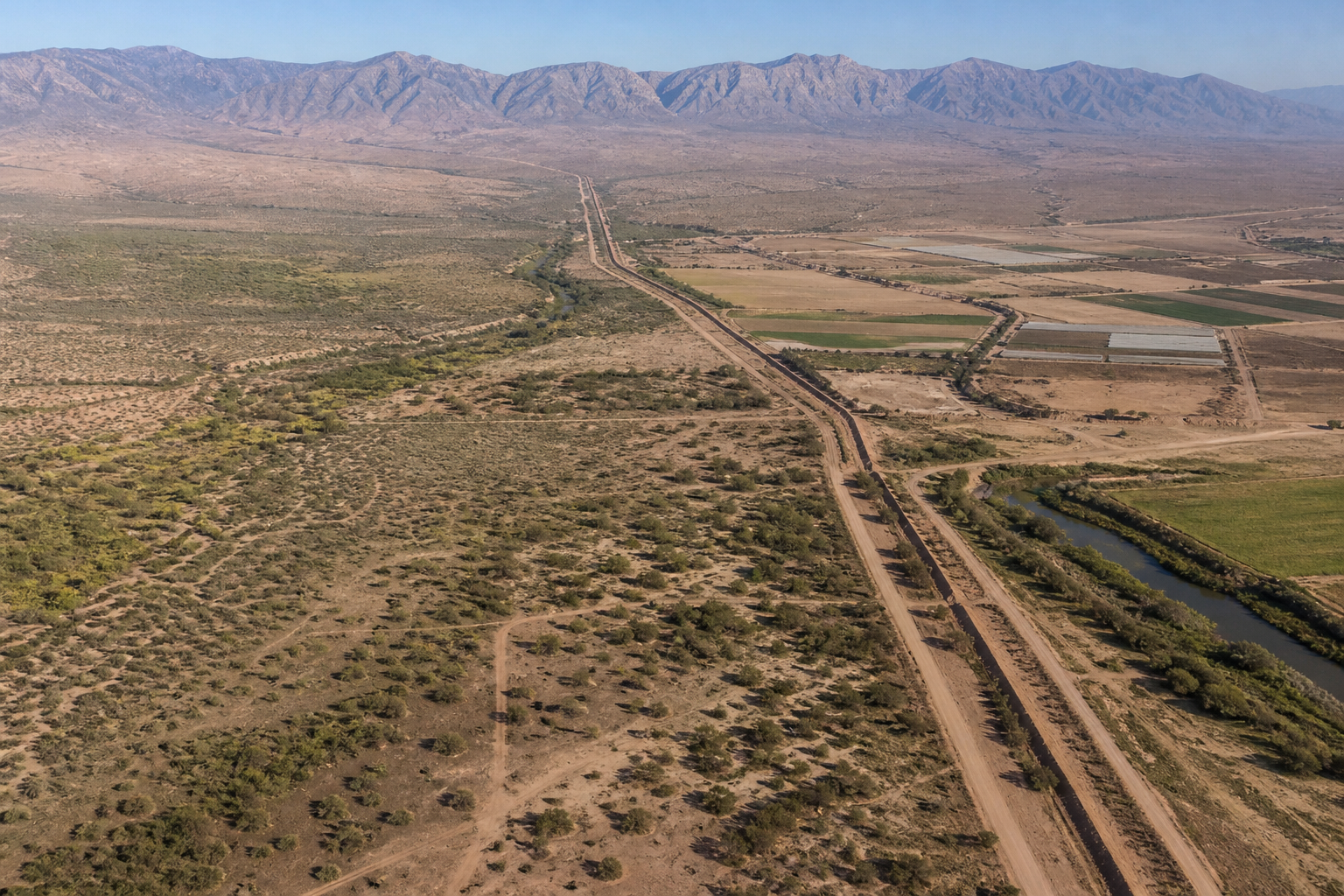
Supreme Court Clears Path for Big Bend Border Wall Project
The Supreme Court this week issued an order allowing construction to proceed on a section of border wall in the Big Bend region of Texas, overturning lower court injunctions that had blocked the project. The decision represents a significant moment in the long-running legal and political struggle over border security infrastructure, and it offers a useful case study in how competing institutional interests—executive authority, judicial deference, and congressional appropriations—collide in practice.
What the Decision Does (and Does Not)
The Court's order is narrow and procedural in character. It does not resolve the underlying constitutional or statutory questions that lower courts had grappled with; rather, it clears the immediate legal obstacle to construction while those broader questions remain in litigation. This is consistent with the Supreme Court's traditional reluctance to issue sweeping pronouncements when a more limited remedy will do. The decision reflects a judgment that the government had demonstrated a likelihood of success on the merits—a threshold question in any stay of an injunction.
The legal theory behind the government's case hinges on a straightforward but contentious premise: that appropriations made by Congress for border security carry sufficient statutory authority to override certain environmental review requirements and other procedural obstacles that might otherwise delay construction. The question of whether Congress clearly authorized such an override, and whether the executive branch properly invoked that authority, is precisely the kind of institutional separation-of-powers question the courts exist to arbitrate.
Institutional Dynamics at Play
What makes this case instructive is the way it illustrates the tension between three legitimate but competing institutional interests. First, there is the executive's constitutional and statutory responsibility for enforcing immigration law and securing the border—a duty that is neither partisan nor discretionary. Second, there are the courts' obligation to ensure that executive action stays within legal bounds and respects procedural requirements. Third, there is Congress's power of the purse, which carries real weight in determining what priorities the government pursues.
Lower courts had blocked the project by finding that the government had not adequately addressed environmental concerns or complied with certain statutory consultation requirements before beginning construction. These are not frivolous objections. Environmental law exists for a reason, and procedural requirements exist to ensure that agencies do their homework and consider alternatives before proceeding. The rule of law depends partly on the enforcement of such rules against even the executive branch.
Yet the Supreme Court's decision to lift the lower court injunction reflects a judgment that in this instance, the statutory authority Congress provided for border security infrastructure carried enough weight to justify proceeding despite procedural objections that lower courts had deemed dispositive. That is a defensible judicial posture, though reasonable people can disagree with it.
The Policy Dimension
From a conservative standpoint, border security is a legitimate governmental function and a reasonable use of public resources. The question of how much border wall to build, where to build it, and whether it represents the most cost-effective approach to border management is a policy question on which reasonable conservatives disagree. Some prioritize physical barriers; others argue that technology, personnel, and legal reform would yield better results. That debate is healthy and necessary.
What should not be in dispute is the government's basic authority to build infrastructure for border security when Congress has provided the appropriation and statutory authority to do so. If the courts are to defer to that authority, however, they must do so carefully and within legal bounds. The danger lies not in allowing border security infrastructure but in allowing the executive to circumvent legal requirements wholesale by invoking security concerns. That path leads away from constitutional government and toward administrative discretion unmoored from law.
A Procedural Principle Worth Remembering
The Supreme Court's approach here—allowing construction to proceed while litigation continues—is pragmatic and reflects a reasonable judicial humility about institutional capacities. Courts are not well-positioned to manage large-scale construction projects or to make technical judgments about engineering and logistics. The executive branch, by contrast, has expertise and administrative machinery suited to such tasks. A proper judicial role is to ensure that the executive exercises its authority within legal bounds, not to micromanage the details of implementation.
That said, procedural safeguards and environmental review exist for a reason. If the government can simply brush past them when security concerns are invoked, those requirements become hollow formalities. The challenge for courts—and for the executive branch—is to honor both security needs and legal constraints simultaneously. It is not always easy, and no single decision will resolve the tension permanently.
Looking Forward
As the full litigation proceeds through the courts, the underlying question will remain: Did Congress clearly authorize the executive to override certain statutory requirements in pursuit of border security? That is a legitimate legal question, and reasonable jurists may reach different conclusions. The Supreme Court's stay order does not finally answer it; it merely allows the government to proceed while the question is litigated.
For conservatives who value both strong border security and fidelity to law, the outcome should be viewed as a partial victory but not a complete one. The project can proceed, which is appropriate. But the legal questions remain open, and they should be resolved with an eye toward preserving both institutional competence and constitutional constraint. That is the more durable path.
