
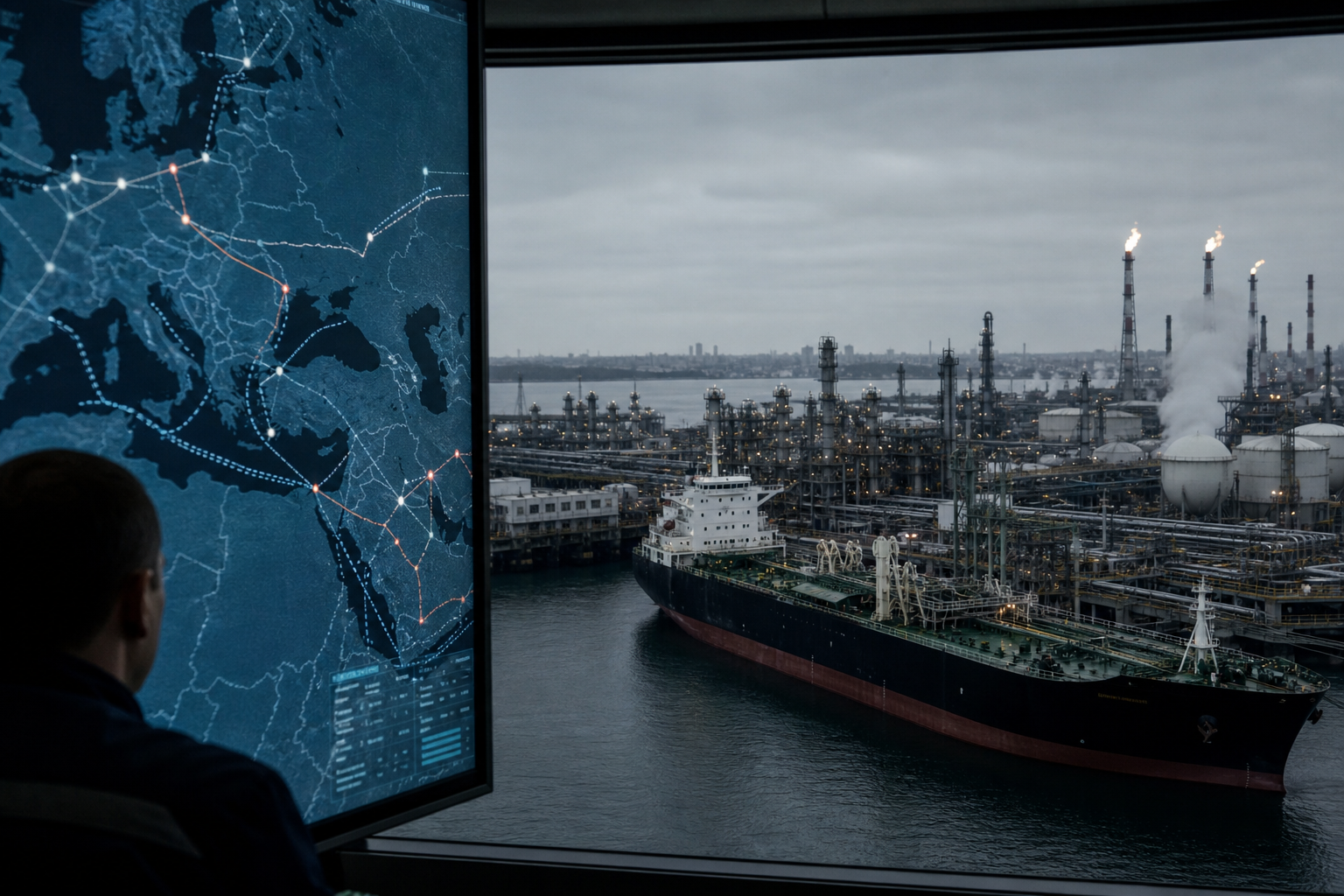
Former Vice President Mike Pence is making a familiar but still important argument about the war in Ukraine: if the West wants to shorten the conflict, it must put greater pressure on the revenue stream that helps sustain the Kremlin's war machine. In practical terms, that means tightening the screws on Russia's energy exports.
That case deserves a serious hearing. Whatever one thinks of Pence's broader foreign policy record, the basic strategic point is sound. Russia is not simply fighting with tanks and artillery; it is fighting with the proceeds of oil and gas sales. A regime that can keep earning hard currency from global energy markets can absorb sanctions, replenish state coffers, and continue financing a long war of attrition.
This is not a new insight, but it remains one of the central facts of the conflict. Russia's economy is heavily dependent on energy production. Oil and petroleum products, in particular, have long been critical sources of export earnings and budget support for the Russian state. Since the full-scale invasion of Ukraine in 2022, Western governments have imposed sanctions, price caps, and import restrictions intended to limit that revenue. Yet Russia has continued to sell large volumes of crude to buyers outside the transatlantic alliance, often through rerouted shipping networks and expanded trade with countries willing to keep buying at discounted prices.
Why Energy Revenue Matters
Wars of this kind are not decided by speeches alone. They are decided by industrial capacity, manpower, logistics, and money. Russia still has all four to one degree or another, but money is the hinge on which the rest swings. If Moscow can continue monetizing its energy sector at scale, it can fund weapons production, pay troops, subsidize key industries, and stabilize its domestic political system enough to keep going.
That is why targeting energy exports is not some peripheral talking point. It goes to the center of the problem. Sanctions that inconvenience oligarchs may have symbolic value. Export controls on certain technologies matter. Military support for Ukraine is indispensable. But if the free world is serious about increasing pressure on the Kremlin, it cannot leave the largest source of Russian external earnings half-addressed.
There is also a broader lesson here about economic statecraft. For too long, many Western governments treated energy interdependence as a guarantee of moderation. The theory was simple: nations that trade heavily with one another will think twice before risking disruption. In Europe's case, that assumption proved dangerously optimistic. Dependence on Russian energy did not civilize the Russian state. It gave the Kremlin leverage.
The Limits of Half Measures
The challenge, of course, is that energy sanctions are harder than slogans make them sound. Oil markets are global. Supply disruptions affect prices well beyond the targeted country. Democratic governments must weigh not only strategic pressure on Moscow, but also fuel costs at home, inflation, and the political consequences of tighter energy supply. That is one reason Western policy has often leaned toward incremental restrictions rather than an all-out effort to choke off exports immediately.
Still, there is a difference between prudence and drift. The current approach has often looked like a compromise between moral seriousness and market caution. It has imposed real costs on Russia, but not enough to produce decisive strategic effect. If Pence's argument is that the West should stop congratulating itself for partial measures and instead focus on the main source of Russian resilience, he is identifying a real weakness in the present policy mix.
A tougher energy strategy could include:
- More aggressive enforcement of existing sanctions and price-cap rules, especially against shipping and insurance arrangements designed to circumvent them.
- Secondary pressure on networks and intermediaries that facilitate covert or disguised Russian oil trade.
- Expanded domestic and allied energy production to reduce the risk that tighter sanctions simply raise global prices and blunt their own effect.
- Clearer coordination with Europe and Asian partners so that sanctions policy is not undermined by uneven implementation.
That last point matters. A sanctions regime is only as strong as its enforcement and its coalition discipline. If major buyers or facilitators can exploit loopholes with little consequence, then a policy intended to constrain war finance turns into a complicated exercise in moral theater.
An America First Debate Worth Having
There is also a domestic political dimension here, especially on the American right. The Republican coalition is still debating the meaning of foreign-policy restraint after Iraq and Afghanistan. Many conservatives are rightly skeptical of open-ended commitments abroad. They want a clearer accounting of costs, objectives, and U.S. interests. That skepticism is not isolationism by definition; often it is simply a demand for seriousness.
But seriousness cuts both ways. If one believes, as many traditional conservatives do, that Russian aggression threatens the stability of Europe, weakens deterrence, and invites larger dangers down the road, then one must also ask what tools short of direct military confrontation can strengthen Ukraine's position. Economic pressure on the Kremlin's energy base is one of the more plausible answers.
This is the better version of an America First argument: not retreat from the world, but a disciplined use of American strengths. The United States remains an energy power. It also remains the central coordinator of the Western financial system. Those advantages can be used to put pressure on an adversary without sending American troops into combat. That does not make the policy cost-free, but it does make it preferable to passivity.
The Energy Policy Connection at Home
Pence's argument also carries an uncomfortable implication for U.S. domestic policy. A country that wants to use energy as a strategic asset must be willing to take energy production seriously at home. That does not require ignoring environmental concerns or pretending every regulatory limit is foolish. It does require recognizing that energy abundance is not merely an economic convenience. It is a geopolitical instrument.
Washington too often debates energy policy as if it were sealed off from foreign affairs. It is not. When American production is constrained and allied supply is fragile, hostile producers gain leverage. When the United States and its partners can supply more oil and gas to world markets, sanctioning petrostates becomes more practical. Markets still matter. So does state power. The two are not easily separated in a war of this kind.
A Sound Strategic Instinct
None of this guarantees a quick end to the war. Sanctions rarely produce neat or immediate outcomes. The Kremlin has shown a high tolerance for economic pain, and authoritarian systems can shift burdens onto ordinary citizens in ways free societies rightly resist. Ukraine's battlefield fortunes will still depend on military aid, manpower, and European resolve.
Even so, Pence is right about the central strategic instinct. If the goal is to weaken Russia's capacity to wage prolonged war, the West must focus more intently on the export engine that finances that war. Not every hawkish statement in Washington deserves applause. But this one points toward a genuine reality: regimes that run on energy revenue are vulnerable, above all, when that revenue is put at risk.
That is not a call for recklessness. It is a call for coherence. A free world that says it wants Ukraine to endure and Russia's aggression to fail should align its economic tools with its stated aims. On that point, at least, Pence is making a case worth taking seriously.
