
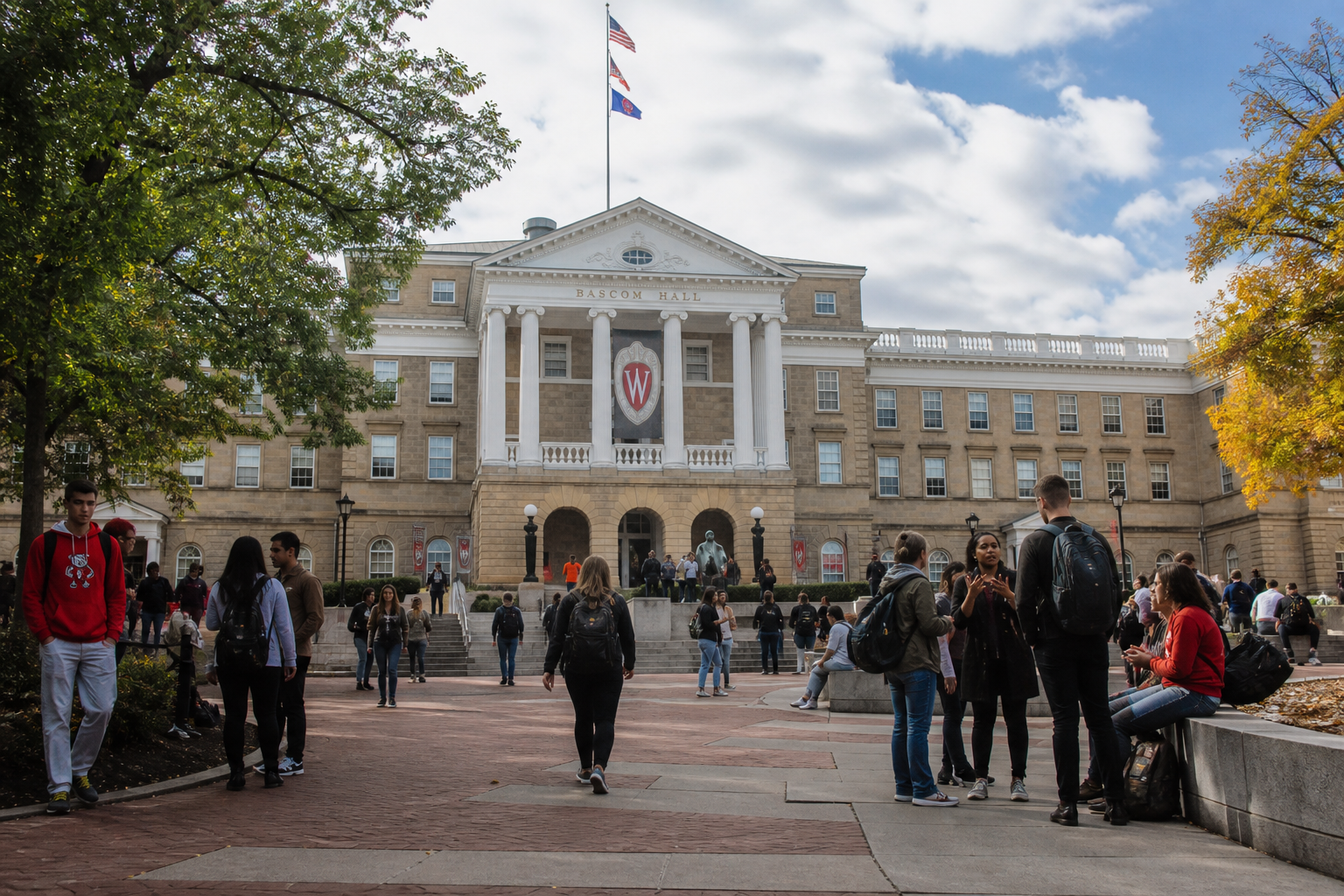
When Dissent Becomes Dangerous on Campus
American universities have long styled themselves as bastions of open inquiry—places where ideas compete, where students encounter viewpoints that challenge their assumptions, and where the collision of different perspectives is understood as essential to learning. That ideal has always been imperfectly realized. But in recent years, a troubling pattern has emerged: the substitution of ideological conformity for intellectual rigor, enforced not by administrators issuing decrees but by peer pressure, social ostracism, and fear of public denunciation.
This is not a problem unique to any single political orientation. Conformism is a human tendency that can afflict any ideological tribe. What distinguishes the current moment is the particular mechanisms by which conformity is being enforced in academic and institutional settings, and the speed with which those mechanisms have metastasized across American life—from college classrooms into newsrooms, corporate headquarters, and now into the corridors of Congress itself.
The Mechanism of Fear, Not Law
The tools of this enforcement deserve scrutiny precisely because they operate beneath the surface of official policy. A student who expresses a heterodox view does not face expulsion or official sanction—not usually. Instead, he or she may face social exclusion, may be denounced on social media, may find their words circulated and caricatured by those seeking to embarrass them. Faculty members have learned to self-censor, not because a dean has forbidden certain opinions, but because the cost of transgression has become too high to bear. A single misstatement, taken out of context and amplified by activists, can derail a career.
This is conformity enforced by intimidation rather than by law—and in some ways, that makes it more corrosive to genuine free thought. When a regime explicitly forbids dissent, people know what they are up against. They can make a conscious choice to resist or comply. But when conformity is enforced by an ambient threat of social destruction, the calculus changes. Silence becomes safer than speech. Self-censorship becomes rational.
From Campus to Congressional Corridors
The concern is not merely academic. What begins on college campuses rarely stays there. The young people who graduate from universities where ideological conformity is the norm do not simply shed those assumptions when they enter professional life. Many carry those expectations with them into journalism, law, government, and business.
This should worry conservatives and liberals alike, though for different reasons. Conservatives are right to observe that progressive ideology currently dominates many elite institutions, and that skepticism toward progressive orthodoxy can carry a social cost in those environments. But the deeper problem is structural: any society that allows conformity to flourish in its credentialing institutions—the places where leaders are trained and ideas are vetted—risks calcifying its own thinking and losing the capacity for self-correction.
A Congress where members fear that expressing a dissenting view will trigger a social media campaign designed to end their career is a Congress less capable of deliberation. A judiciary where judges worry about the reputational consequences of unpopular rulings is a judiciary compromised in its independence. A press corps where journalists self-censor out of fear is a press that cannot perform its basic function of holding power accountable.
The Conservative Interest in Intellectual Freedom
Conservatives have a particular stake in defending intellectual freedom, and not merely for partisan reasons. The conservative intellectual tradition—genuine conservatism, not mere partisanship—has always depended on the ability to make arguments that challenge the prevailing consensus. Edmund Burke, Russell Kirk, and William F. Buckley all understood that conservatism survives only when it can engage in real debate with its critics.
The current conformist impulse threatens that. If the price of expressing skepticism toward progressive assumptions becomes social or professional exile, then one of the few remaining checks on ideological uniformity—the willingness of intelligent people to argue against the grain—erodes away. That should concern anyone who believes that self-government depends on the clash of competing ideas.
What Can Be Done
The answer is not censorship in the other direction. Conservatives who dream of a reverse conformity, where conservative orthodoxy is enforced with equal vigor, have learned nothing. The answer is to defend the principle that intellectual communities—universities above all—must actively protect space for heterodox thought, even when that thought is uncomfortable or unpopular.
This requires courage from institutional leaders. It requires faculty and administrators willing to say, explicitly and repeatedly, that students and faculty members will not face professional consequences for holding unfashionable views. It requires pushback against the notion that moral clarity requires ideological uniformity.
It also requires something from conservatives: a commitment to making the case for conservative ideas on their merits, not merely to exploit the cultural anxieties of those who feel silenced. Real intellectual freedom is not just the freedom to speak without punishment; it is the freedom to be wrong, to change your mind, to wrestle with hard questions without predetermined answers.
Conclusion
The American university system emerged from a tradition that valued both truth-seeking and tradition. For that system to survive, it must recover both. Ideological conformity dressed up as moral clarity is not progress; it is a different kind of stagnation. The work of restoring genuine intellectual freedom will be slow and unglamorous. But it is essential to the health of American institutions and to the republic they are meant to serve.
