
How Fraudulent Federal Credentials Expose Immigration System Vulnerabilities
Federal law enforcement agencies have recently documented cases in which individuals facing deportation have attempted to use forged federal identification credentials to evade removal proceedings. These incidents, while not epidemic in scale, highlight a troubling gap in the government's ability to prevent document fraud and verify identities during immigration enforcement operations.
The specifics of how these fraudulent documents are obtained and deployed remain partially obscured by ongoing investigations, but the pattern reveals a predictable problem: when enforcement mechanisms lack sufficient verification infrastructure, bad actors will exploit the weakness. This is not unique to immigration policy—it reflects a broader principle that any system reliant on credential verification must invest in the means to authenticate those credentials.
The Scope of the Problem
Reports suggest that individuals have obtained convincing counterfeit federal agency identification cards, apparently hoping that such documents would cause immigration officers to hesitate or allow passage. In a handful of documented cases, these fraudulent credentials were discovered during routine deportation proceedings or border enforcement operations. The schemes appear to target specific federal agencies whose identification formats may be easier to replicate or less standardized than others.
The number of cases remains relatively limited, and there is no evidence to suggest this represents a widespread trafficking network in forged federal documents. Nevertheless, each successful case of document fraud represents a failure of the verification systems designed to prevent such outcomes. When someone can forge a federal credential convincingly enough to create uncertainty at an enforcement checkpoint, it indicates that authentication protocols need strengthening.
What This Reveals About Agency Coordination
The emergence of this vulnerability points to a structural problem in how federal immigration agencies communicate and verify information. Immigration and Customs Enforcement, Customs and Border Protection, and supporting federal agencies must be able to rapidly confirm whether an identification document is authentic. If verification systems are slow, decentralized, or rely on visual inspection alone, they become vulnerable to sophisticated counterfeiting.
Institutional conservatives have long emphasized the importance of competent administration as a prerequisite for effective governance. A border and immigration enforcement apparatus that cannot verify the credentials of its own personnel—or distinguish authentic federal identification from counterfeit—fails at a basic operational level. This is not a failure of principle or policy; it is a failure of institutional capacity and coordination.
The Counterfeit Document Economy
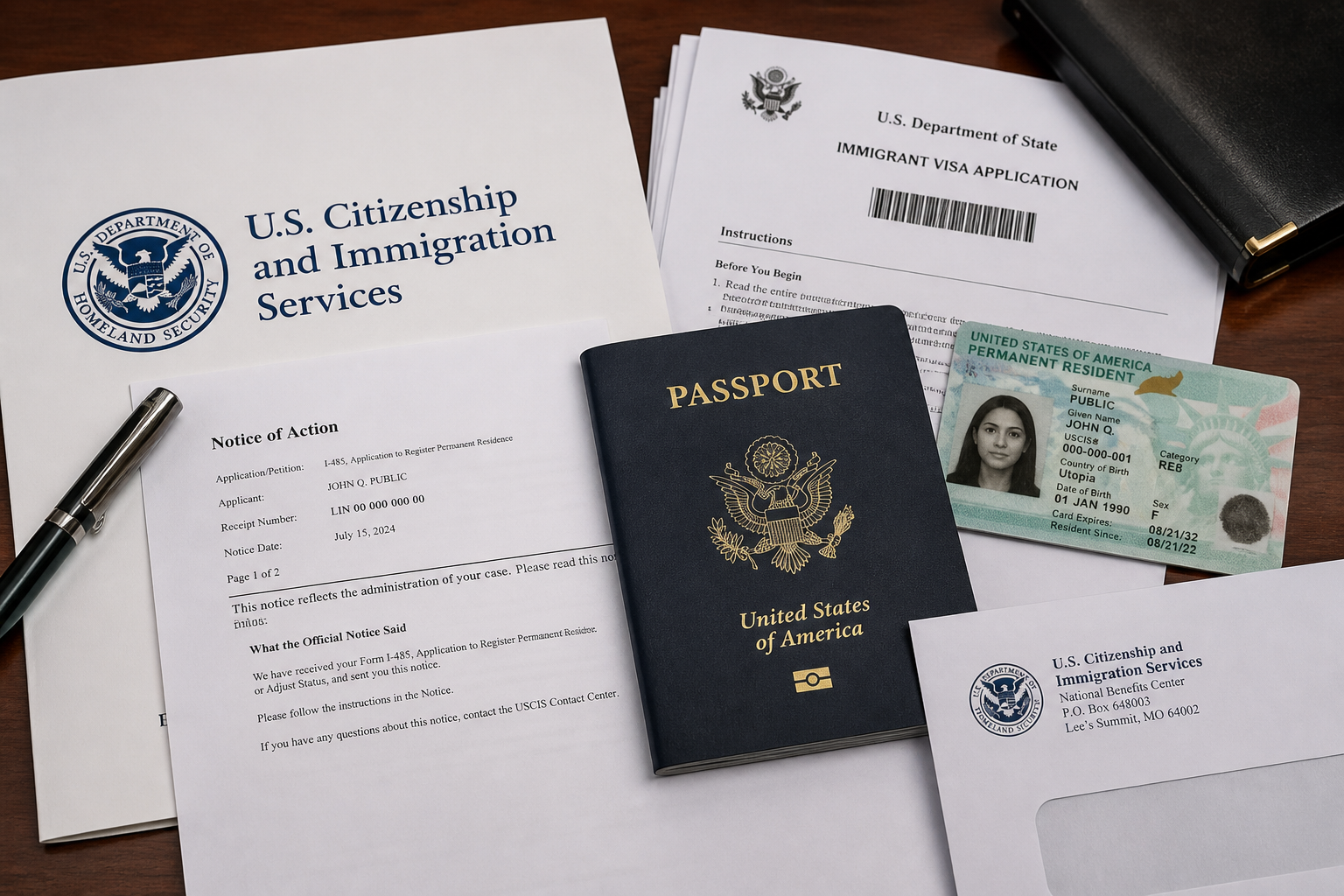
Document fraud targeting immigration enforcement is not new. For decades, individuals have sought false travel documents, work permits, and resident alien cards to circumvent immigration restrictions. What distinguishes the use of forged federal credentials is that it requires either access to government printing facilities, possession of stolen credential stock, or sophisticated enough counterfeiting capability to replicate security features embedded in official documents.
The existence of such capability suggests either that document security standards are insufficient, or that enforcement agencies lack the resources to distribute and track credential stock effectively. Both problems are addressable through policy and administrative reform, but both require acknowledgment and investment.
Implications for Immigration Enforcement
Any credible immigration enforcement system depends on the ability to verify identity and status. If that verification can be defeated through document fraud, then enforcement loses much of its meaning. From a conservative institutional perspective, this underscores why immigration policy debates must address not only the rules governing immigration, but the administrative capacity to enforce them.
Current immigration law is substantially ignored in practice because enforcement capacity has lagged behind legislative intent for decades. Adding document verification failures to an already strained enforcement apparatus multiplies the problem. Border patrol agents, ICE officers, and adjudicators cannot do their jobs effectively if they cannot trust the documents before them.
What Needs to Change
Addressing this vulnerability requires multiple concurrent steps. First, federal agencies must audit and upgrade credential security features to incorporate more sophisticated anti-counterfeiting measures. Second, agencies must implement real-time verification databases that allow officers in the field to confirm the authenticity of identification documents within minutes. Third, personnel training must be standardized to ensure that officers can recognize signs of document tampering or forgery.
Fourth, credential stock must be tracked and inventoried rigorously to prevent theft or diversion. Fifth, coordination between immigration agencies and federal law enforcement must improve to share information about emerging counterfeiting techniques and suspected fraud rings.
The Larger Question of Institutional Competence
This issue represents a microcosm of a larger challenge facing federal governance: the capacity of government institutions to execute their mandates competently. Americans of all political persuasions should care whether their government can do the basic administrative work necessary to enforce its own laws. When forged federal credentials can fool immigration officers, it suggests that either the credentials are insufficiently secure or the officers lack adequate training and tools to verify them.
Immigration remains one of the most consequential policy debates in American politics. But that debate cannot be resolved through legislation alone. Implementation matters. Institutional capacity matters. The ability to distinguish authentic documents from forgeries matters. Without that capacity, whatever policy Congress adopts will fail in practice.
The discovery of fraudulent federal credentials in immigration cases should serve as a wake-up call to improve the administrative systems that make enforcement possible. This is not a partisan issue—it is a governance issue. Conservatives rightly emphasize the importance of limited government and personal responsibility, but those principles presuppose that government institutions, within their proper scope, actually function competently. That functionality requires investment, coordination, and honest assessment of where current systems fall short.
