
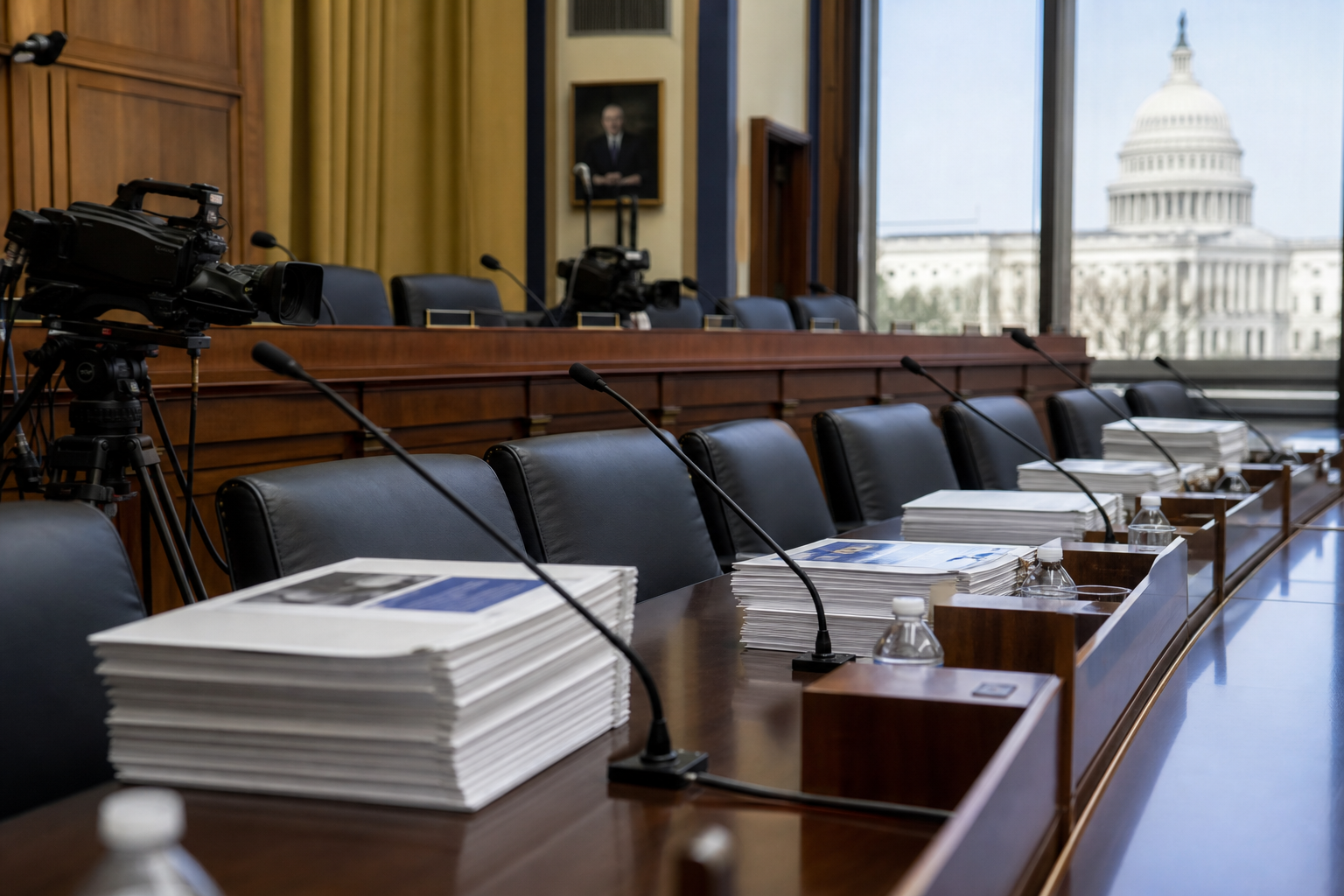
Congress Turns Its Attention to a Sensitive but Necessary Question
Congressional scrutiny of progressive media outlets with alleged foreign ties raises a difficult question that Washington too often prefers to avoid: when does advocacy journalism become a vehicle for outside influence, and what obligations do lawmakers have to investigate it? That question is now drawing renewed attention as lawmakers examine whether a network of activist media organizations, including BreakThrough News, has financial or organizational connections that deserve fuller public disclosure.
The issue here is not whether left-leaning outlets have a right to exist. In a free society, they plainly do. Nor is the issue whether journalists or commentators may hold strong political views. American media has always contained ideological voices, and it always will. The concern is narrower and more serious: whether groups presenting themselves as independent news operations are in fact intertwined with political advocacy structures or foreign-linked entities in ways that the public does not readily see.
That is a proper subject for oversight. It is also one that should be handled carefully, because a constitutional republic has good reason to be wary of both foreign influence and government overreach into the press.
Why Foreign Influence Questions Matter
Foreign influence is not a partisan concern. It is a national one. Americans have spent the better part of the last decade hearing, often quite rightly, about the risks posed by foreign governments and foreign-backed networks seeking to shape public opinion inside the United States. Those concerns have usually focused on social media platforms, covert online campaigns, or state-backed outlets from adversarial governments. But the principle is broader than any one platform or ideology.
If money, coordination, or strategic guidance from abroad is helping shape political messaging that is then repackaged as domestic journalism, citizens have a right to know it. Transparency is the first line of defense in a self-governing society. Voters can make their own judgments, but only if they are given a fair picture of who is speaking and whose interests may be involved.
That is why disclosure laws exist. It is why Congress conducts oversight. And it is why organizations operating in the gray area between activism and journalism should expect close examination when questions arise about their funding streams or institutional relationships.
The Blurred Line Between Journalism and Activism
One of the defining features of modern media is that the old distinctions have weakened. Traditional newspapers, broadcasters, nonprofit newsrooms, activist collectives, influencer networks, and issue-advocacy groups often inhabit the same digital space and sometimes use the same language of "reporting" or "news." For readers, that can make it harder to distinguish straight journalism from mobilization.
That confusion is not limited to the left. Conservative readers know well that the broader media world contains many institutions that blend analysis, activism, and reporting. The answer, however, is not selective outrage. The answer is a consistent standard.
Organizations that claim the credibility and protections associated with journalism should meet the corresponding expectations of transparency and independence. If an outlet is primarily an advocacy arm, it should say so plainly. If it receives support from entities with foreign connections, that fact should not be obscured behind layers of branding, nonprofit arrangements, or partner organizations. The public should not have to conduct forensic accounting to learn who is underwriting political narratives.
Congress Must Avoid Turning Oversight Into Theater
There is, of course, a temptation in moments like this to turn oversight into performance. Lawmakers know that media hearings produce clips, and clips produce fundraising emails. But if Congress is serious, it should resist the urge to make this merely another partisan spectacle.
A responsible inquiry would focus on verifiable questions:
- What are the funding sources for the organizations under review?
- What formal partnerships or shared personnel arrangements exist among activist groups, nonprofit entities, and media brands?
- Are there direct or indirect foreign financial links that trigger legal or ethical concerns?
- How are these outlets presenting themselves to audiences, donors, and platforms?
Those are factual matters. They do not require Congress to pass judgment on ideology. They require Congress to determine whether disclosure has been adequate and whether existing law is being followed.
That distinction matters. The First Amendment does not protect fraud, hidden agency relationships, or deceptive representations about who is behind a purportedly independent voice. At the same time, the First Amendment does protect unpopular speech and partisan speech. The challenge is to enforce transparency without drifting into censorship.
A Double Standard Americans Have Grown Tired Of
Part of the public frustration here stems from an obvious double standard. For years, Americans were told to treat any hint of foreign influence in conservative-adjacent media or digital ecosystems as a matter of grave democratic danger. In many cases, that warning was justified. But the same standard must apply when questions arise on the progressive side of the landscape.
Institutions lose credibility when they appear interested in foreign influence only when it flatters their own political assumptions. If progressive media networks have received sympathetic treatment from establishment gatekeepers while similar allegations on the right triggered immediate alarm, then the problem is not merely bias in coverage. It is a broader collapse of trust in the fairness of public scrutiny.
Conservatives should be clear-eyed here. The goal is not revenge. It is consistency. A republic cannot sustain confidence in its institutions if oversight is understood as a weapon used only against one faction.
The Larger Policy Implication
The deeper issue extends beyond any single outlet. American law and public policy have not kept pace with the hybrid nature of modern influence operations. We now live in an environment where political messaging can move through nonprofits, media startups, social platforms, advocacy groups, and international networks with remarkable speed and little clarity for the ordinary citizen trying to sort out what is genuine, what is coordinated, and what is sponsored.
That suggests a need for more robust disclosure rules and stronger enforcement of existing ones, not broader speech restrictions. The constitutional order works best when government acts with precision. It should not police viewpoints. It should insist on honesty about structure, funding, and affiliation.
That approach has the advantage of being both principled and durable. It does not depend on who happens to hold power. Today the scrutiny may fall on progressive media organizations. Tomorrow it could fall elsewhere. The standard should remain the same: if you seek public trust while operating in the political information space, you should be candid about who you are and who supports you.
Sunlight, Not Suppression
There is an old and useful conservative instinct at work in this debate: preserve liberty, but do not be naive about power. Foreign actors understand that America can be influenced not only through embassies and lobbying shops, but through culture, information, and institutions that shape public perception. A free nation does not answer that danger by silencing speech. It answers it by exposing hidden relationships and allowing citizens to judge with open eyes.
That is what congressional oversight, at its best, is supposed to do. If lawmakers can keep their focus on transparency rather than grandstanding, this inquiry may serve a useful public purpose. It may remind media organizations that independence is not merely a posture, and it may remind the public that self-government requires more than access to information. It requires some confidence that the sources of that information are being honestly represented.
In the end, sunlight is the point. Not suppression. Not partisan score-settling. Just the basic republican principle that the American people are entitled to know who is trying to influence them, and why.
