
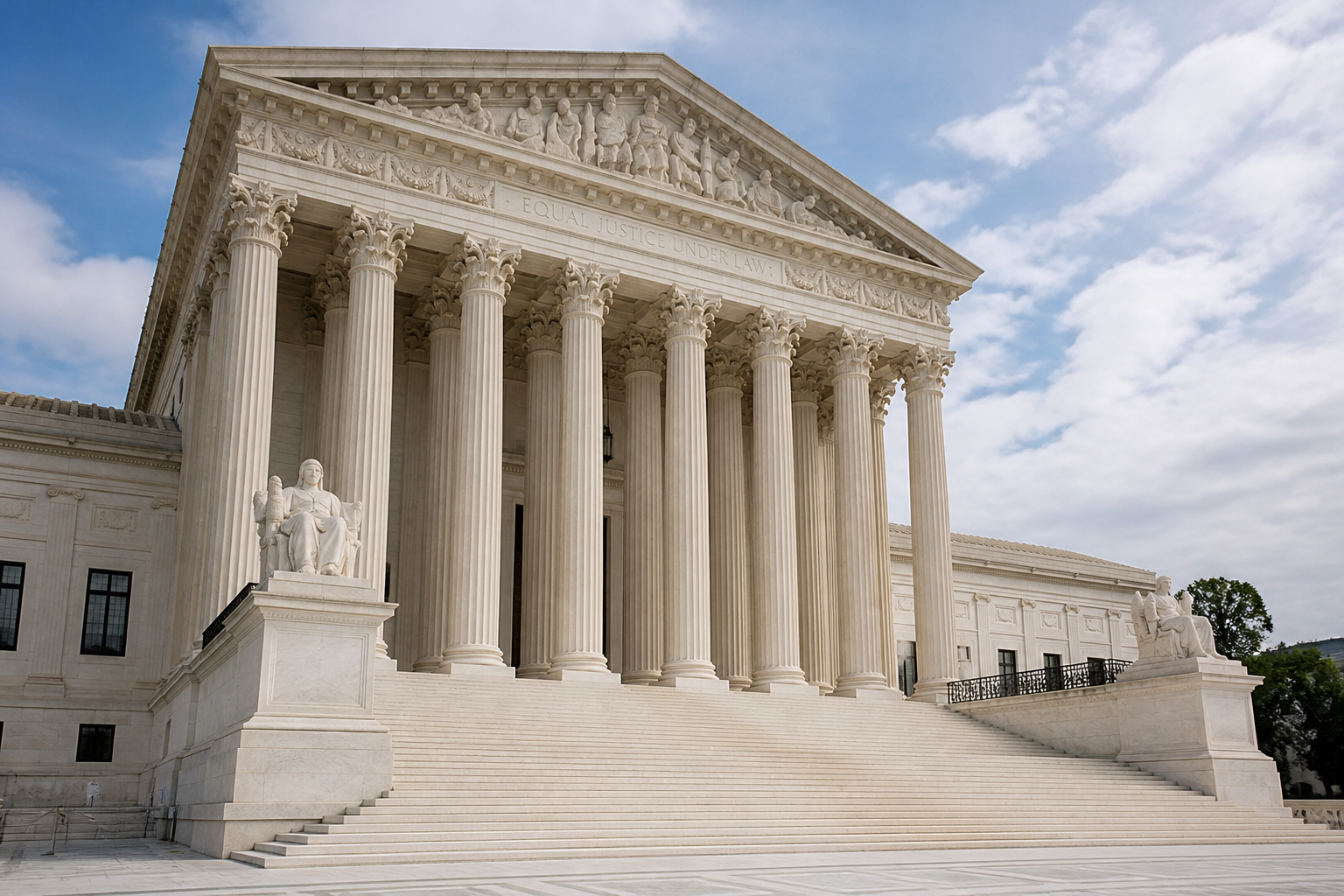
The High Court Reins in Executive Authority Over Immigration Enforcement
The Supreme Court has issued a significant ruling that narrows the discretionary authority of immigration judges, clarifying that certain decisions about deportation cases remain firmly within the bounds of statute and regulation rather than individual judicial discretion. The decision represents an important clarification of how immigration law operates in practice and has immediate implications for the administration of the nation's immigration system.
What the Ruling Addresses
At its core, the decision concerns the scope of authority wielded by immigration judges—officials within the Department of Justice who preside over removal proceedings. These judges operate within a specialized administrative system separate from the federal judiciary, and their role has long been a subject of institutional debate. The Court's ruling establishes that immigration judges cannot extend protections or create exceptions beyond what Congress has authorized in statute or what the executive branch has established through regulation.
The case underscores a fundamental principle of administrative law: executive officials, including specialized judges, derive their authority from statutes passed by Congress and rules established by their departments. They cannot simply decide, on an individual basis, to bypass those frameworks—no matter how sympathetic a particular case might appear.
Why This Matters Institutionally
This ruling reflects a conservative institutional principle that deserves serious consideration across the political spectrum: separation of powers functions best when each branch stays within its proper sphere. Immigration judges, as administrative officials, are part of the executive branch. Their role is to apply the law Congress has made, not to remake it from the bench based on individual cases.
There is a temptation, particularly in cases involving sympathetic individuals facing deportation, to view the judge's discretion as an avenue for mercy or justice. But unlimited discretion in law is not the same as justice. When immigration judges operate beyond their statutory authority, they are not simply being kind—they are making policy decisions that belong to Congress or, by delegation, to executive leadership answerable to the President and ultimately to voters.
The alternative to bounded discretion is not a more compassionate system; it is a more arbitrary one. If each of the nation's immigration judges can independently decide which deportation cases warrant exceptions, the law becomes inconsistent, unpredictable, and dependent on which judge a case lands before. That is not how the rule of law operates.
The Separation of Powers Foundation
The Constitution divides governmental authority among three branches for a reason. Congress makes policy, the President executes it, and courts interpret whether it comports with constitutional limits. Immigration policy is, fundamentally, a matter of national sovereignty and legislative prerogative. Congress has the authority to determine who may enter or remain in the United States, and it has exercised that authority through the Immigration and Nationality Act and related statutes.
When immigration judges exceeded their authority, they were not merely interpreting law—they were effectively rewriting it. A judge might have concluded that current law produced an unjust outcome in a particular case. But the remedy for unjust law is to petition Congress for reform, not for judges to ignore or circumvent the law's requirements. This is not a question of compassion; it is a question of whether we maintain a system of laws or defer to the judgment of individual officials.
Implications for Immigration Enforcement
For immigration enforcement agencies, the ruling clarifies their authority and obligations. It establishes that removal decisions must be grounded in the statutory framework Congress has created. This provides needed consistency and predictability in how immigration law operates across the country.
For those concerned about enforcement of immigration law, the decision is significant because it closes a channel through which the law's requirements were being waived on an individual basis. For those who believe immigration policy should be more permissive, it suggests that change must come through the legislative process or through executive rule-making that properly exercises delegated authority—not through judges acting beyond their power.
Questions Remain About Policy
It is worth noting that this ruling is about authority and process, not about whether current immigration law itself is wise. Reasonable people disagree on whether immigration policy should be more restrictive or more permissive, and those debates belong in Congress, not in courtrooms. Some may believe immigration law is too harsh and should be reformed. Others may believe enforcement has been too inconsistent. The Court's ruling does not settle those policy questions—it simply establishes that they must be resolved through proper constitutional channels.
Immigration judges, like all administrative officials, have a duty to apply the law as Congress wrote it. If that law produces results some believe are unjust or unwise, the path forward is to persuade elected representatives to change it, not to ask judges to ignore it.
The Broader Principle
This decision reflects a principle that extends well beyond immigration: in a constitutional republic, law matters. It cannot be suspended, rewritten, or ignored simply because an individual case pulls at our sympathies. The alternative to rule by law is rule by the preferences of whoever holds power at any given moment—and that is never more stable or just than law itself.
The Court's ruling is measured institutional conservatism at work: respecting the constitutional structure, honoring the role of each branch, and insisting that authority be exercised within proper bounds. Whether one views current immigration law as too restrictive or too permissive, that principle—that officials must operate within their authority—is essential to a functioning constitutional system.
