
Donald Trump’s approach to Iran has long rested on a simple premise: economic pressure can do what years of diplomacy often failed to do, namely constrain Tehran’s regional ambitions and force a more favorable bargain. The argument has a certain intuitive appeal. Iran’s rulers depend heavily on energy revenue, maintain an expensive network of regional proxies, and govern a population that has repeatedly shown frustration with economic mismanagement and political repression. If pressure is going to work anywhere, many conservatives believe, it should work here.
But the harder question is not whether pressure can hurt Iran. It plainly can. The question is whether a strategy of “maximum pressure,” if pursued without a credible diplomatic off-ramp and a disciplined sense of limits, can remain a tool of deterrence rather than become a staircase to war.
The logic behind maximum pressure
There is a serious policy case for coercive sanctions on the Iranian regime. Tehran has for decades supported armed proxy groups across the region, threatened U.S. partners, harassed shipping, and advanced nuclear capabilities that alarm both its neighbors and the West. No prudent American administration can simply ignore those realities. A posture of passivity would invite further adventurism.
For conservatives, the appeal of pressure is also philosophical. It promises firmness without immediate large-scale military intervention. It seeks to impose costs on a hostile regime while preserving American leverage. And it reflects a basic truth too often neglected in foreign policy debates: regimes do not moderate simply because Washington wishes them to. They respond to incentives, constraints, and forceful signals about what behavior will carry a price.
That is the strongest argument in Trump’s favor. A United States that never imposes meaningful costs on Iran is a United States that teaches the wrong lesson. Deterrence, after all, depends on credibility.
Where pressure can become peril
Still, pressure is not self-executing strategy. Sanctions, diplomatic isolation, military signaling, and covert pressure are instruments, not an end state. Their value depends on what they are meant to achieve and how clearly those aims are communicated.
The danger in any Iran policy is that Washington may define success too broadly. If the stated objective is to end all proxy activity, permanently halt nuclear advances, transform Tehran’s regional behavior, and perhaps even weaken the regime to the point of internal collapse, then pressure can become an open-ended campaign with no clear measure of completion. That kind of ambiguity is risky. It encourages both sides to test one another. It also increases the odds that an incident at sea, a militia strike, or a misread signal turns an ostensibly limited pressure campaign into a military confrontation.
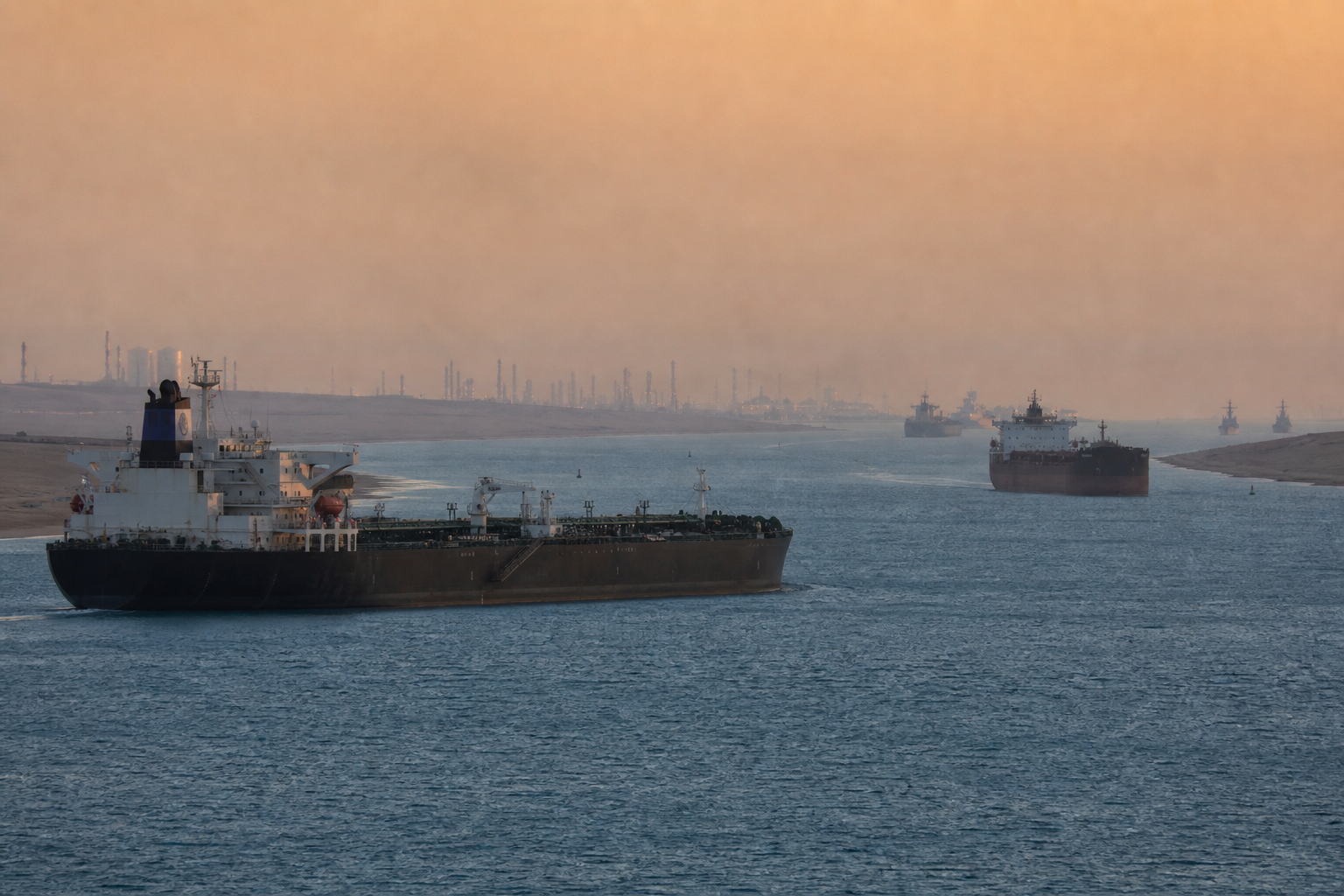
Iran has a long record of asymmetric response. When squeezed economically, it has often looked for ways to impose costs indirectly rather than through conventional war. That can mean pressure on shipping lanes, attacks by aligned militias, cyber activity, or calibrated acts of provocation designed to raise the price of American resolve. In other words, a regime under pressure does not always yield. Sometimes it lashes out.
That is why conservatives should resist the comforting fiction that toughness alone eliminates escalation risk. Serious statecraft requires acknowledging that coercion can deter, but it can also provoke.
The constitutional and strategic question
There is also an institutional issue that deserves more attention than it usually receives in moments of international tension. The United States is not well served when major questions of war and peace drift forward through improvisation. The Constitution does not require paralysis, and presidents plainly possess substantial authority to protect American forces and interests. But the larger the stakes become, the stronger the case for public clarity, congressional consultation, and defined strategic objectives.
That is not weakness. It is constitutional seriousness. A republic should know the difference between containing a threat and stumbling into a conflict whose costs were never fully debated.
For many on the right, the lessons of Iraq and Afghanistan remain relevant here. They do not prove that every use of force is a mistake, nor do they oblige the United States to retreat from the Middle East altogether. They do, however, warn against expansive missions untethered from narrow, realistic goals. If maximum pressure is to be more than a slogan, it must be matched by maximum clarity about what America will and will not do.
What a prudent policy would look like
A sustainable Iran policy should rest on four principles.
- First, maintain deterrence. Iran and its proxies should understand that attacks on Americans, major assaults on regional partners, or efforts to close vital shipping routes will meet a response. Deterrence fails when threats are made casually or enforced inconsistently.
- Second, define achievable goals. The point of pressure should be to constrain the regime’s most dangerous behavior, not to indulge fantasies of easy transformation. Regime change may tempt armchair strategists, but it is not a substitute for policy.
- Third, preserve a diplomatic off-ramp. Sanctions are most effective when paired with terms under which they can be eased. Even adversaries need a path, however narrow, to de-escalation. Otherwise pressure becomes indistinguishable from punishment for its own sake.
- Fourth, keep Congress and the public informed. Americans are more likely to sustain a hard policy when they believe its purpose is limited, lawful, and connected to concrete national interests.
This kind of approach would satisfy neither the isolationist instinct nor the permanent-war temptation. But that is precisely why it is worth defending. The United States has real interests in preventing a nuclear-armed Iran, protecting freedom of navigation, and defending its forces and allies. It also has a real interest in avoiding another sprawling Middle Eastern conflict entered through drift, rhetoric, or pride.
Strength requires discipline
Trump’s supporters often describe maximum pressure as the realistic alternative to appeasement. In one sense, that is fair enough. A policy of wishful thinking toward Tehran is not realism. It is negligence dressed up as sophistication. But there is another error on the opposite side: assuming that every display of pressure automatically reflects strategic wisdom.
Foreign policy is not a cable-news test of machismo. It is the patient management of power in a world where adversaries react, allies worry, markets move, and miscalculations carry human costs. A strong president is not merely one who threatens force credibly. It is one who knows exactly what political end force and pressure are meant to serve.
That is the standard by which any Iran strategy should be judged. If economic pressure is tied to clear objectives, backed by credible deterrence, and bounded by constitutional and strategic restraint, it can be a legitimate tool of American statecraft. If it becomes a substitute for strategy itself, it risks turning pressure into prelude.
For conservatives who believe in both American strength and constitutional prudence, that distinction matters. The choice is not between toughness and retreat. It is between disciplined pressure in service of defined national interests and a looser, more emotional approach that may discover too late that it has confused resolve with escalation.
